
Microsoft will make its own Maia chips the primary system for running AI in its products starting in 2027. The plan was set out alongside the Maia 300, the third generation of its custom AI chip, with deployments measured in gigawatts from next year. That scale could mean more than a million Maia 300 chips in 2027. For companies buying AI services, the message is that Microsoft intends to run inference largely on its own silicon.
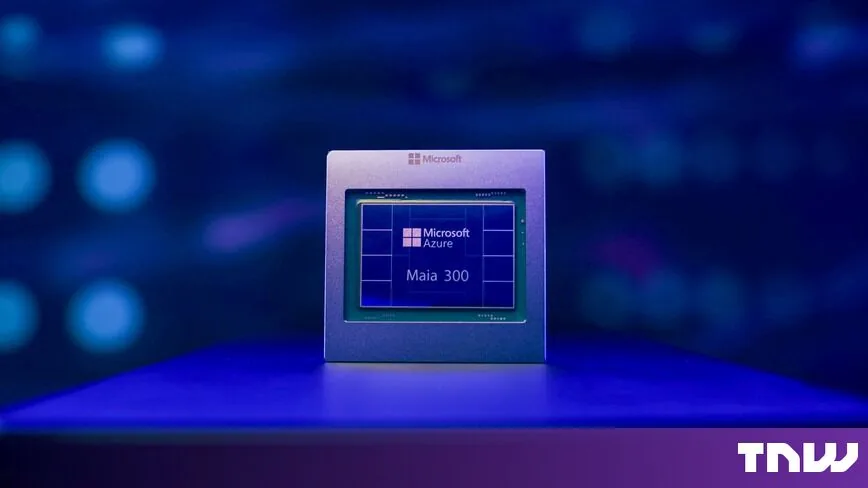
Maia 300 specifications and deployment plan
Maia 300 is built for inference, the work of running AI models once they are trained. Microsoft positions it for long conversations, reasoning, and AI agents that carry out multi-step tasks. Per megawatt of power, the company expects 40% more tokens than top GPU systems, although it did not say which systems were used for comparison. A full rack is claimed to deliver up to seven times the output of its predecessor, Maia 200.
Each rack holds 96 chips and draws about 167 kilowatts. For reference, Nvidia latest GB300 racks hold 72 GPUs and draw about 142 kilowatts, according to Reuters. Inside, Microsoft has split Maia 300 into smaller pieces, called chiplets, for computing, memory, and data transfer. The computing parts use TSMC N2P process, and each chip carries eight stacks of HBM4 memory.
Maia 200 is already in use and provides context for the rollout. It serves Microsoft Copilot and runs OpenAI models alongside Microsoft own MAI models. Support for GitHub Copilot and Microsoft Foundry is expected by the end of the year. The launch follows a push by cloud giants and AI firms to cut reliance on Nvidia, with Google and Amazon operating their own AI chips and OpenAI building its own chip with Broadcom.
What this means for buyers of AI capacity
For large users of Microsoft Copilot, GitHub Copilot, and Microsoft Foundry, a shift to in-house chips can affect availability and unit economics of inference. Rani Borkar, who runs Azure hardware systems and infrastructure, described the goal as delivering more intelligence for every watt, every dollar, and every byte of memory by optimizing across the entire system. Small firms will feel this indirectly through service speed and quotas, while large customers may see changes in capacity planning and contract terms.
Several points still need verification before procurement decisions. Microsoft has not named the GPU systems behind the 40% token claim, so buyers cannot yet compare cost per million tokens on equal terms. Factory capacity is another variable: in August, The Information reported talks with TSMC to make more than 300,000 Maia 300 chips for 2027, below the implied million-chip scale. This news alone does not mean lower prices or immediate migration of workloads.
Confirmation will come from deployment and disclosure milestones. Microsoft plans to share more about the chip at its Ignite conference in San Francisco next month. The marker to watch is gigawatt-scale deployment next year and actual use as the primary inference system in 2027. If those dates hold, in-house silicon becomes the baseline for Microsoft AI capacity.
