
Muse Wonder and Muse Wonder Full arrived on October 12, 2026 as Meta's most capable models to date for personal and professional agentic tasks. The family targets work from insurance claims and lease review to building working apps, with expert coverage in law, finance and health. Meta positions the launch fourteen months after the start of its AI overhaul and as a step beyond Muse Spark. That timing matters for business because agent reliability now depends on memory and sustained execution.
Memory, focus and training behind the launch
Meta offers two models with different access paths. Muse Wonder is available through the Meta Model API and Muse Code, while Muse Wonder Full is available for Muse Code subscribers. The company said Muse Wonder will soon power experiences in Muse, rolling out first to subscribers, and will also power artifact generation and other processes that require more intelligence. Meta also plans to use Muse Wonder to develop specialized models for all Muse users.
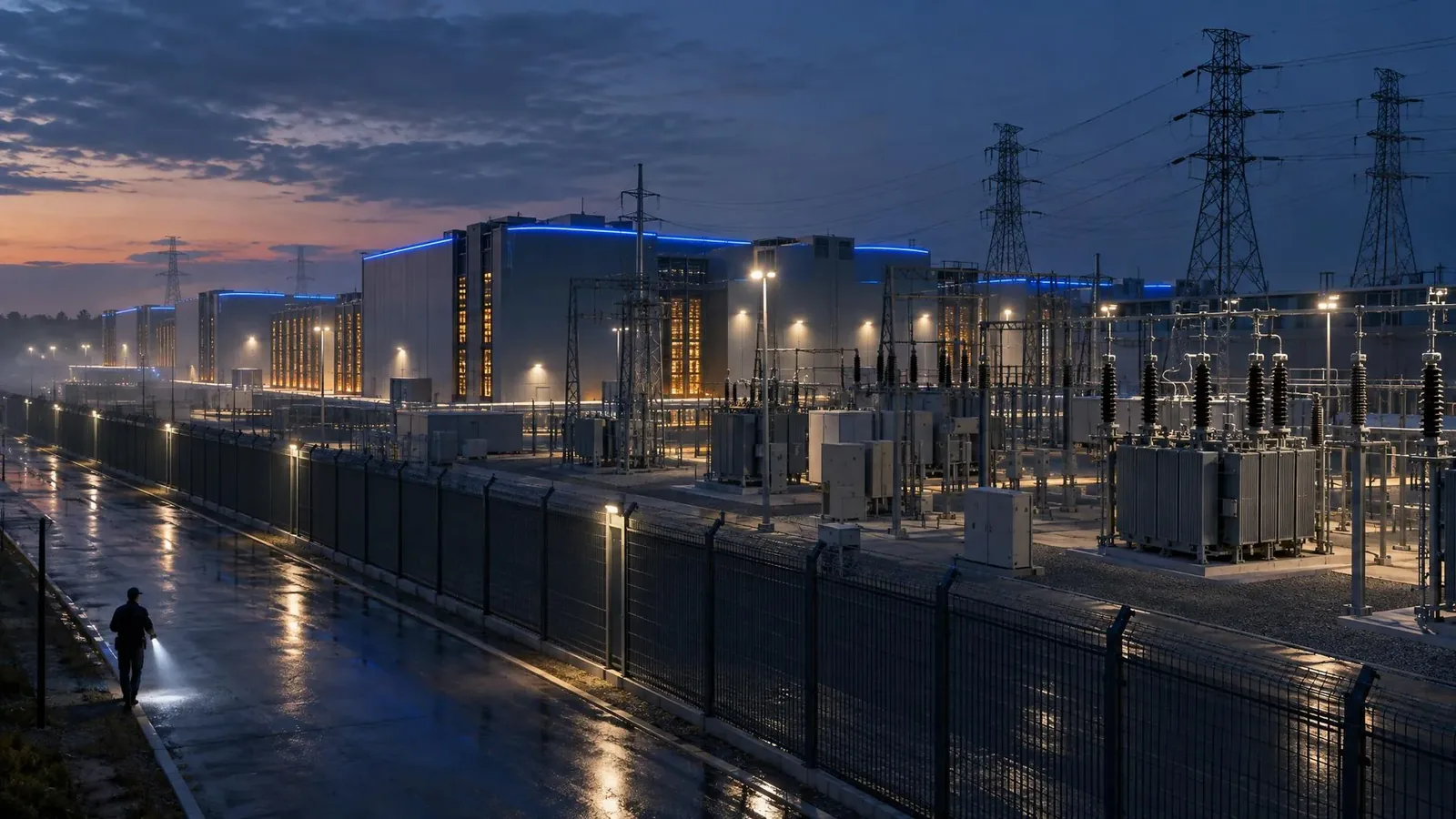
Both models center on Active Memory and Active Focus. Active Memory carries user context across conversations and retrieves details relevant to the current task. Active Focus keeps work moving toward a goal by trying other approaches, recovering from errors, asking for clarification and checking in before important actions. Training took place at the gigawatt-scale Prometheus data center, extending the scaling approach outlined with Muse Spark across pretraining and reinforcement learning.
Coding demonstrations show how those traits combine in long-running work. Examples include building a playable 3D kitchen game from customizable image inputs, assembling a running plan in a browser with OpenStreetMap data based on preferences and circumstances, designing and ordering custom swag from real Instagram photos, and preparing a wedding seating chart from complex matching requirements. Meta describes software work as tracking requirements, editing across a codebase and cycling through testing and revision. Both models were trained on diverse, long-running tasks to sustain that process.
What this means for business use of agents
For companies adopting AI, the practical gain is broader coverage of professional tasks without switching tools. Named evaluations include Harvey's Legal Agent Benchmark for document-grounded legal work, Vals Finance Agent V2 for financial-agent tasks, MemoryBench for long-term memory, FocusBench for focus, SWE-Marathon for sustained software execution and DeepSWE for long-horizon coding. Meta claims state-of-the-art results across agents, memory and coding and published a comparison table against other frontier models. Small firms get access to expert-domain assistance, large firms get a base for longer internal workflows.
Limits and checks center on safety, generalization and verification. Meta said the models avoid sharing private information without permission, refuse help with actually harmful acts and support defensive cyber work such as finding flaws in customer code. Muse Wonder is described as the most aligned model to date, with the strongest safeguards against CBRN and cyber misuse while preserving defensive cyber use. Open items include the promised full evaluation report and additional safety report, plus the need to test out-of-distribution behavior on company data before deployment.
The marker to watch is whether Muse Wonder Full continues to beat the Muse Spark 1.3 trend on unfamiliar tasks as test-time compute scales. Meta already reports such an upward shift and links it to larger base models whose post-training gains transfer better. Confirmation through independent benchmark results and subscriber rollout in Muse will show if personal agents can handle varied goals, tools and constraints at production quality.
