
Manus, developer of the Manus AI agent, has raised more than $500 million in a round led by Boyu Capital with participation from Tencent Holdings and others. Bloomberg had reported the deal would value the company at $4 billion, about double the sum Meta Platforms reportedly offered last December. The outcome matters because a consumer agent startup blocked from acquisition has secured standalone scale funding.
Funding round and path to Manus 2.0
Manus announced the financing today without disclosing an exact amount above $500 million or a confirmed valuation. Boyu Capital, a private equity firm, led the investment, while Tencent, one of China largest tech firms, joined alongside several other backers. The reported $4 billion valuation follows a failed acquisition by Meta, scrapped in April after Chinese regulators blocked it. That sequence turned Manus back into an independent company seeking capital for product development.
Manus 2.0 arrived a few days before the funding announcement as the first major update since the relaunch as a standalone business. Its core is a new harness, a set of software modules that adjust how the underlying LLMs behave on tasks. The company says the harness cuts token use by 23.2% across some tasks and speeds up processing by more than 28%. Lower token consumption directly affects inference cost, while faster execution shortens multi-step jobs run by the agent.
The company began as Butterfly Effect Co. Ltd. in 2022 with a browser extension giving access to multiple AI models through one interface. In 2024 it raised $10 million and shifted focus toward the agent that became Manus. The agent launched last March through an invite-only program, and videos of it performing multi-step tasks on user computers spread widely. That attention led to a $75 million investment from Benchmark in April 2025 and a headquarters move to Singapore.
What the funding means for business users
For companies testing agents for operations, Manus 2.0 adds building blocks closer to production use than a chat demo. A generation tool creates clips and video games, while Cloud Computer hosts backend code for those games in a managed environment. The same environment can host websites and continue long-running tasks when a local machine is offline. Small teams gain hosted execution without managing servers, while larger firms get a way to pilot agent-built services.
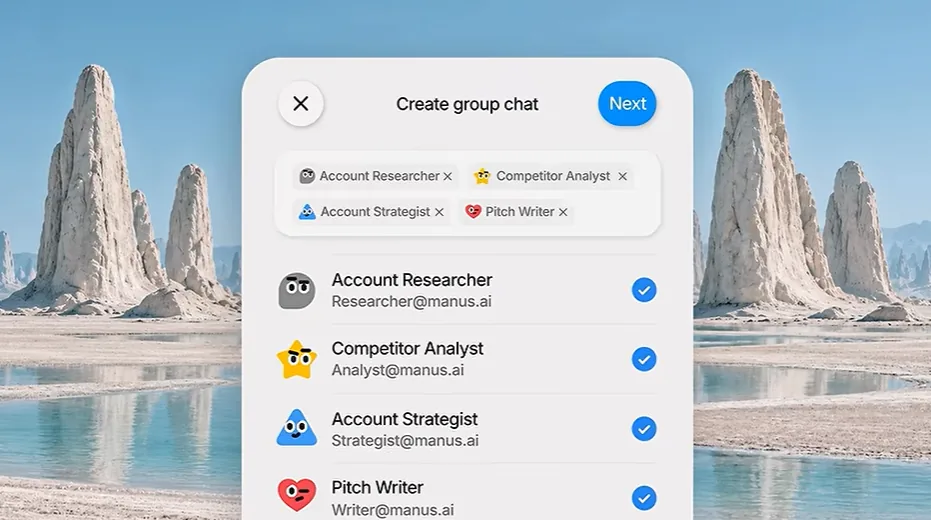
Cue, the third addition, lets users give agents resources such as an email account and a digital wallet, plus a shared message board for collaboration on complex tasks. That design supports delegation of purchases, correspondence and multi-agent work, but it also raises control requirements around permissions, spending limits and audit trails. Buyers should verify how credentials are stored, how actions are approved and how agent-to-agent messages are logged. The announcement itself does not answer those governance questions.
The marker to watch is whether Manus converts capital into retained consumer and business usage against well-funded rivals. Nous Research raised $90 million for a competing consumer agent one day earlier, while Meta expanded in-house agent work after the failed deal and its Muse app recently passed ChatGPT on the U. S. App Store. If Manus reports growth in paid use, enterprise pilots or Cloud Computer workloads over the next quarters, the $4 billion valuation will look like a platform bet rather than viral momentum.