
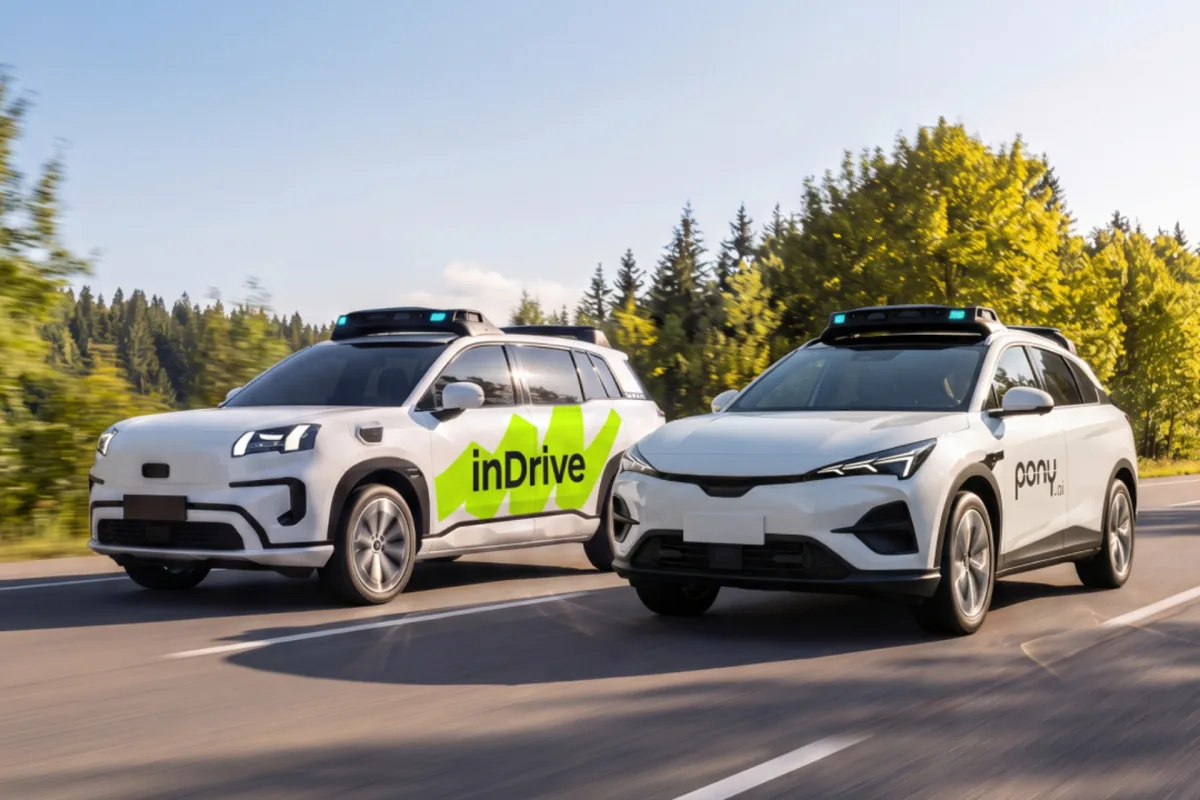
inDrive will start testing Pony. ai robotaxis in Astana in the first half of 2027 under a memorandum signed with Pony. ai and Nvidia. The pilot will run through the inDrive app and initially include a safety operator, with fully driverless trips as the longer-term target. The plan links a fare-negotiation ride-hailing operator, a Chinese autonomous-driving developer and a chip platform supplier in one deployment. For business, it signals that robotaxi competition is moving into Central Asia.
How the Astana pilot is structured
The companies signed a memorandum of understanding to explore bringing Pony. ai vehicles onto the inDrive platform, CTO Yuri Misnik told TechCrunch. Testing is scheduled for the capital Astana, a city of about 1.7 million people. The first phase keeps a safety operator in the vehicle, which lowers regulatory and operational risk while the partners collect winter driving data. The stated sequence is supervised testing first, then a move toward rides without a driver.
Under the proposed division of roles, Pony. ai supplies its Gen-7 robotaxis, inDrive offers them through its ride-hailing app and operates them in Kazakhstan. Nvidia provides AI technology, including the Hyperion platform and the Halos safety system. Nvidia also offers the Alpamayo model plus tools for synthetic data generation and scenario testing of driving systems. Hyperion is positioned as a ready-made base of sensors and computing that reduces the need to build and integrate every component separately.
The timing connects to national policy and to parallel moves by rivals. Kazakhstan announced plans last month to launch autonomous taxi services in 2027, with initial trials in Astana and two other cities, and introduced rules for testing on certain public roads. Earlier this month Uber disclosed plans to test Pony. ai robotaxis in London and supervised autonomous rides with Wayve, while working with other robotaxi firms in the Middle East. Pony. ai itself reported 1,975 vehicles at the end of June and targets more than 3,500 robotaxis in over 20 cities by the end of 2026. The announcement coincided with Nvidia CEO Jensen Huang's first visit to Kazakhstan.
What this means for operating costs
For operators in price-sensitive markets, the cost structure matters more than the autonomy label. inDrive built its position on affordable rides and says its approach is capital-light, combining partner expertise across markets. Nvidia argues that a common sensor and compute foundation can cut development cost for robotaxi builders. Ali Kani, Nvidia vice president of automotive, said such savings matter in emerging markets where human-driven rides are already cheap and autonomous services must compete on fare.
Astana adds a specific operational test that procurement teams should track. The city has months of snow and ice, which complicate perception, braking and lane keeping for automated systems. inDrive founder Arsen Tomsky said launching there creates a chance to evaluate the technology in harsh winter conditions, with lessons transferable to other cold-climate locations. inDrive is also exploring other markets and signed a December agreement with Saudi Arabia's AI Driver around WeRide-powered vehicles starting with Riyadh, targeting a pilot in the first half of 2026 with unclear status. Misnik named a cooperative regulatory environment as a main condition for safe testing.
The marker to watch is whether supervised testing in Astana actually starts in the first half of 2027 under the new Kazakh testing rules. A second marker is Pony. ai progress toward more than 3,500 vehicles in over 20 cities by the end of 2026. If both advance, inDrive gains a tested supply path for autonomous capacity across its network of more than 1,200 cities in 47 countries, alongside delivery, intercity transport and financial services.
