
Grok Voice 3.0 from SpaceXSI, formerly xAI, has taken first place among speech-to-speech models with 86.9 points on the Artificial Analysis Speech-to-Speech Index. The release targets businesses running customer support and sales calls through the Voice Agent API. For buyers of voice agents, the ranking matters because it combines reasoning, task success and listener votes from blind calls.
Benchmark scores, price and production use
Artificial Analysis placed OpenAI Group PBC GPT-Live-1, tested with GPT-6 Astra handling reasoning, at 83.2 points, while Google LLC Gemini 3.8 Live scored 82.6. On Full Duplex Bench, which measures handling of pauses and interruptions, Grok Voice 3.0 received 97%. OpenAI kept the lead on Tau-Voice, built around support calls with heavy accents and background noise, with 74.5% against 71.6% for the new Grok model.
Grok Voice 3.0 is built as a speech-to-speech model, processing voice input and producing voice output inside one pipeline for the Voice Agent API. SpaceXSI reports first audio about 40% faster on the Tau-Voice test than the OpenAI setup. A task in the Artificial Analysis Big Bench Audio run cost about 2.5 cents on Grok Voice 3.0, compared with 3 cents on GPT-Live-1 and 5.5 cents on OpenAI GPT-Realtime-2.1. The API price stays at eight cents a minute, or $4.80 an hour, unchanged from Grok Voice 2.0.
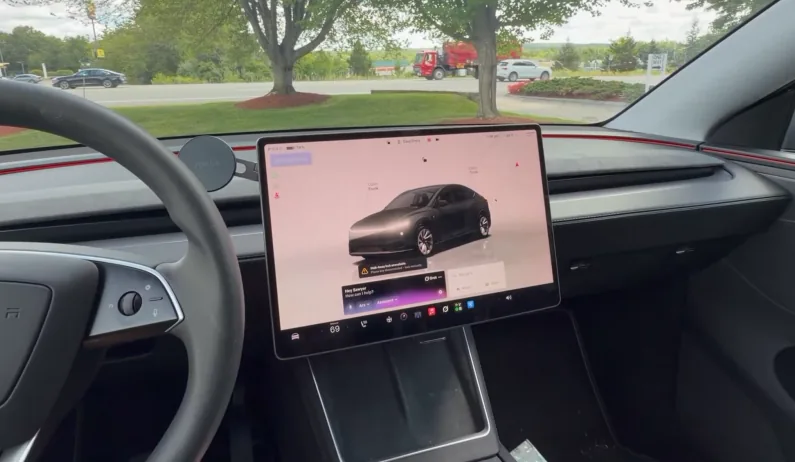
The release follows the consolidation of Elon Musk AI operations inside SpaceX. SpaceX acquired xAI in February, the AI unit was renamed SpaceXAI in July and took the SpaceXSI name earlier this month. Tesla vehicles already generate millions of Grok Voice conversations a day, with drivers checking calendars and answering email, while larger errands such as booking dinner go through Grok Bot voice mode on the new model. Starlink uses Grok Voice for about 20,000 customer calls a day in several languages.
What this means for support and sales teams
For companies operating support lines, the combination of top index score and lower cost per Big Bench Audio task changes the unit economics of voice automation. Starlink reports roughly 70% of its 20,000 daily calls resolved without human involvement, a level that lets large operations shift staff toward complex cases. Smaller firms get the same eight-cent-per-minute rate, plus automatic migration for agents pointed at the grok-voice-latest alias, which removes re-integration work.
Accuracy data adds a second selection criterion beyond natural sound. On ServiceNow open-source EVA-Bench, covering more than 200 enterprise scenarios, Grok Voice 3.0 scored 74% for accuracy, with no model doing better on accuracy and customer experience combined. ServiceNow senior director Nitin Aggarwal described the pairing of top accuracy with natural, responsive conversation. Buyers still need to check the Tau-Voice gap on accented speech in noise, plus language coverage, escalation rules and logging before committing call volumes.
The marker to watch is whether Starlink holds the 70% autonomous resolution rate and one-in-four sales conversion as traffic scales on version 3.0. If outside deployments repeat those figures at $4.80 an hour, speech-to-speech agents move from pilot to standard front line for support and inbound sales. If conversion drops outside controlled traffic, price advantage alone will not carry deals.
