
Google Labs has expanded CC, its experimental AI agent, into a shared assistant for families and households, the company announced on September 17, 2026. The agent now runs from its own Google account and supports up to six members, each deciding what to share with it. The move matters because it tests whether an AI agent can work as shared household infrastructure rather than a personal productivity tool tied to one person's inbox.
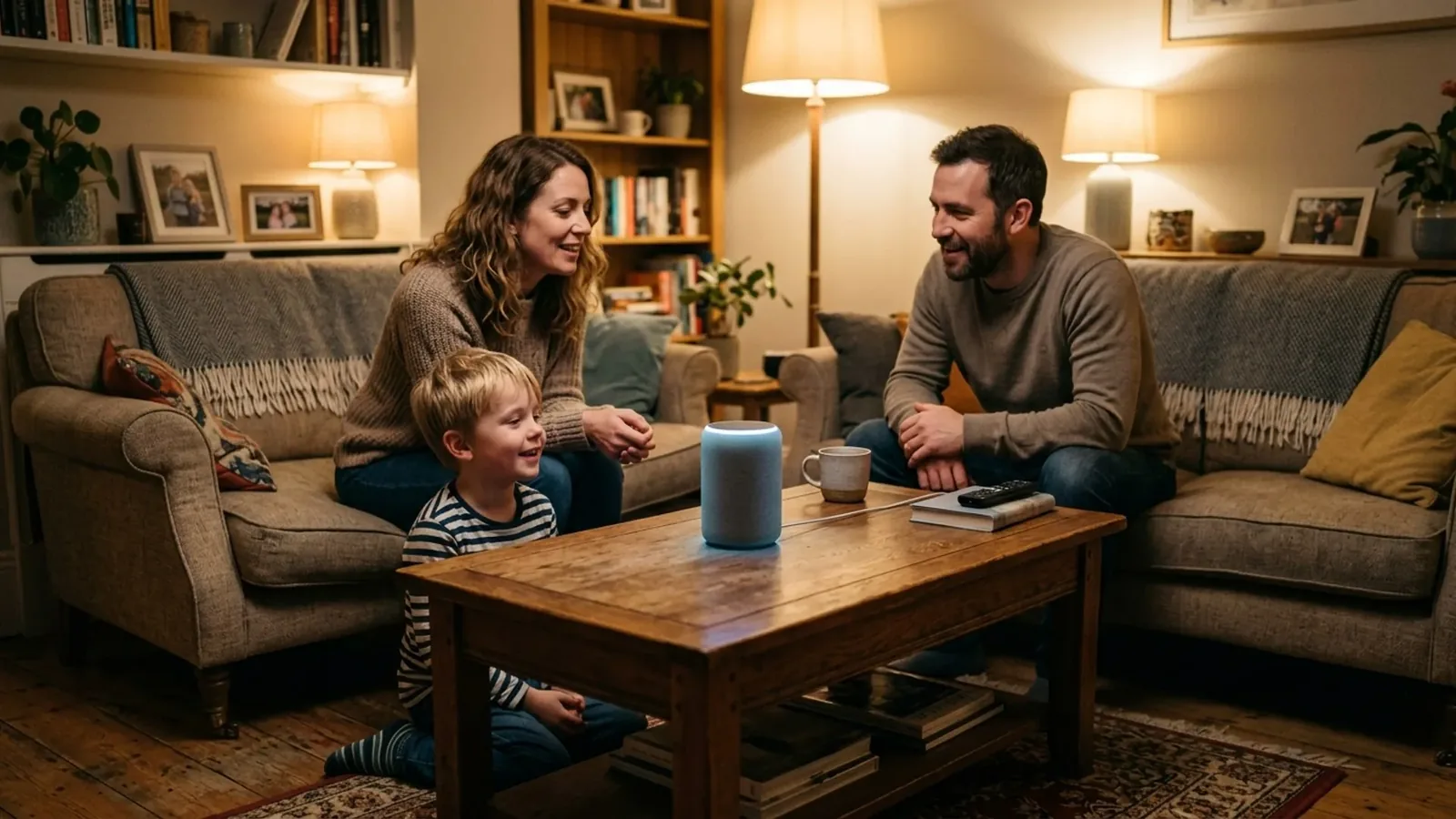
What the expanded CC does
CC was introduced on December 16, 2025, as a personal productivity agent that connected Gmail, Google Calendar, Google Drive and the wider web, then sent a "Your Day Ahead" briefing to the user's inbox each morning. It launched in early access to consumer account users aged 18 and older in the US and Canada, starting with Google AI Ultra and paid subscribers. In May 2026, Google brought CC to the Gemini app as Daily Brief. The household version keeps the same briefing format but delivers it to the whole group, so every member sees who needs to be where, what needs to be done and what CC completed the day before.
Each morning the agent sends a shared "Your Day Ahead" brief to the entire group. It automatically tracks dates and to-dos from the information members share, pulling them into a family calendar or task list and keeping them current as plans change. According to CC's product page, the agent identifies events from shared emails, adds them to the calendar and enriches each entry with details such as what to bring, where to go and when to arrive. It also surfaces to-dos buried across shared emails — forms to complete, appointments to book and RSVPs — and adds them to a shared list. Chat notifications go out when a deadline is near or something needs immediate attention.
Beyond tracking, CC takes on logistics: filling out permission slips or activity registration PDFs, creating school supply shopping lists and crafting weekly meal plans. It can create Google Docs or Sheets, such as meal plans, packing lists and budgets, and share them with the group. The agent asks for missing details and updates its group memory so it can be more helpful the next time. Per the product page, CC identifies fillable PDF forms attached to emails, such as waivers and registrations, and pre-fills the editable fields for a member to review.
What this means for households and teams
For companies that use or adopt AI agents, the household expansion shows a workable pattern for multi-user access: a dedicated account with a clear permissions model instead of one employee's credentials. Tom Shane, a senior product manager at Google Labs, said one of the top requests from users was for CC to do more to help run a busy home, pointing to school schedules, sports practices, bills and dinner planning as shared responsibilities that demand coordination, made harder when information sits across multiple accounts. The same logic applies to small teams coordinating shared inboxes, calendars and recurring tasks without giving an agent access to personal accounts.
The limits are as important as the features. CC cannot sign or submit forms or payments autonomously: it can pre-fill PDF forms and surface purchase links, but it cannot execute purchases, enter credit card details or sign legal or school waivers on a member's behalf. It cannot access encrypted or password-protected PDFs, does not view or edit private primary calendars by default, and will not email a document, form or Drive file to anyone outside the group without explicit approval. Supported attachments are limited to PDFs, images, receipts and plain text; video and audio are not processed. Individual members cannot be removed once they accept an invitation; changing the group requires deleting it, which removes the agent and its shared spaces for everyone while leaving each member's CC account active.
CC remains an early Google Labs experiment, available on the web and mobile to people aged 18 and older in the US with a personal Google account. Existing users will receive an upgrade email in the coming days, and anyone who signed up before September 17, 2026, will receive an invitation to upgrade, with access opening in waves. Upgrading is optional, and after upgrading, existing CC features are turned off by default but can be turned back on in settings. Users in Canada, Australia and New Zealand will be able to join the waitlist when CC becomes available in their country, and existing users there keep their current features. Google describes CC as a standalone experimental service that is not part of Gemini Apps or Google Workspace.
The marker to watch is how Google handles the upgrade wave and the waitlist: if the company moves CC from early access to general availability in the US and opens Canada, Australia and New Zealand, the shared-agent model becomes a standard option for households and small teams rather than an experiment. If the waitlist stays closed and the upgrade remains optional, businesses should treat multi-user agents as a pilot category, not a replacement for existing coordination tools.