
TesterArmy rebranded as e2e and raised $8 million in seed funding on November 3, 2026 to build verification tools for software written with coding agents. Backers include Credo Ventures, KAYA, Point Nine, Baobab Ventures and Script Capital, plus Snowflake co-founder Marcin Żukowski and Uber co-founder Oscar Salazar. The open-source testing framework behind the pivot passed 1.5 million npm downloads in its first month. The move matters because testing becomes the first layer of control over agent-written code.
From closed service to open framework
The team started TesterArmy earlier in 2026 and went through Y Combinator with a closed testing platform. Customers could not store tests alongside code, choose models freely, or run tests locally next to a coding agent. The new e2e name signals a wider ambition to support agents through their work, with testing as the first part of verification. The company extended the framework name to the whole business after developers began to associate the team with that release.
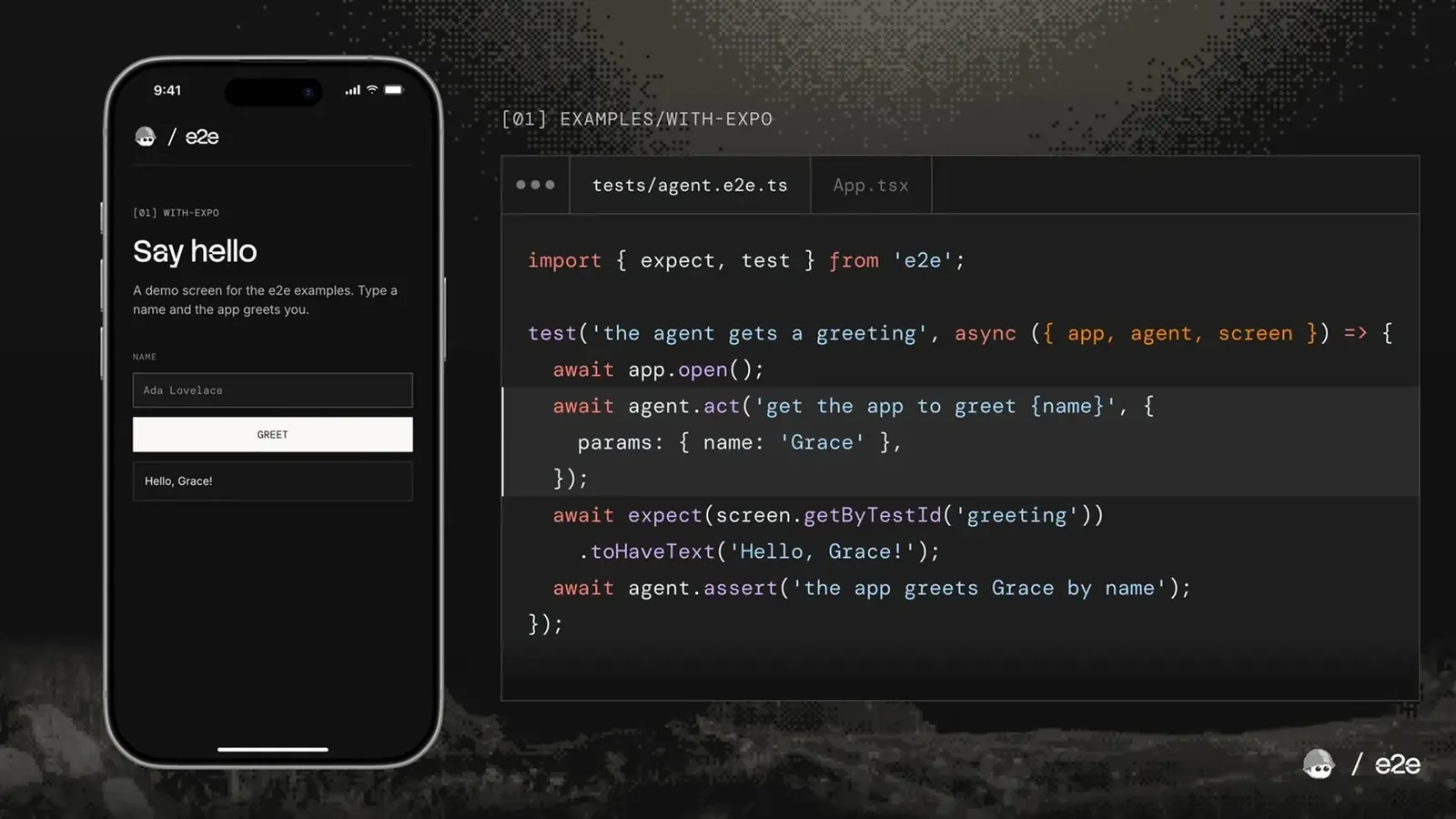
The TypeScript framework launched on October 1, 2026 and covers web, iOS and Android through one API. Developers use role-based locators and auto-retrying assertions for precise checks, then add agent. act(), agent. assert() and agent. extract() steps where a goal is easier to describe than to script. Agent steps run on AI SDK models, including local models, or through existing ChatGPT, GitHub Copilot and SuperGrok subscriptions. An agent skill and MCP server link the framework to Claude Code, Cursor and Codex for test creation and failure analysis.
When an agent step passes with a recorded check, e2e caches the actions and replays them on later runs without a new model call. If an interface change breaks the replay, the live agent resumes control and searches for a new path. Model consumption thus tracks interface changes rather than every repetition of an unchanged test. Tests remain code owned by the user and can run locally or in continuous integration. The package is available on npm under Apache-2.0, though still pre-1.0 with possible API changes and no desktop coverage.
What this means for buyers of test automation
For companies using coding agents, the framework offers a way to keep verification inside the repository and the existing delivery pipeline. Teams keep model choice, run tests beside agents, and avoid moving code and test data to an outside platform. Daily downloads were running at roughly 100,000, with 12,000 GitHub stars and 60 external contributors in the first month. Small teams gain a free Apache-2.0 base for web and mobile checks, while large firms can standardize locators plus agent steps across products.
The commercial model separates free framework use from paid engineering help for rollout and custom work. Those engagements cover test migration, continuous-integration setup, stack-specific development and handover, with tests and applications staying on customer-controlled infrastructure. A managed e2e cloud is planned for 2027 with models and devices, followed by more verification tools. Legacy TesterArmy customers can stay on the old platform until January 15, 2027 with migration support, which sets a clear window for contract decisions.
The marker to watch is whether e2e cloud launches in 2027 without weakening local control, model choice and open licensing. Enterprise rollout work and hiring in Warsaw and San Francisco will show if the team can support production use while the framework is still pre-1.0. If managed runs and device coverage arrive on schedule, the verification layer can become a routine part of agent-driven development.
