
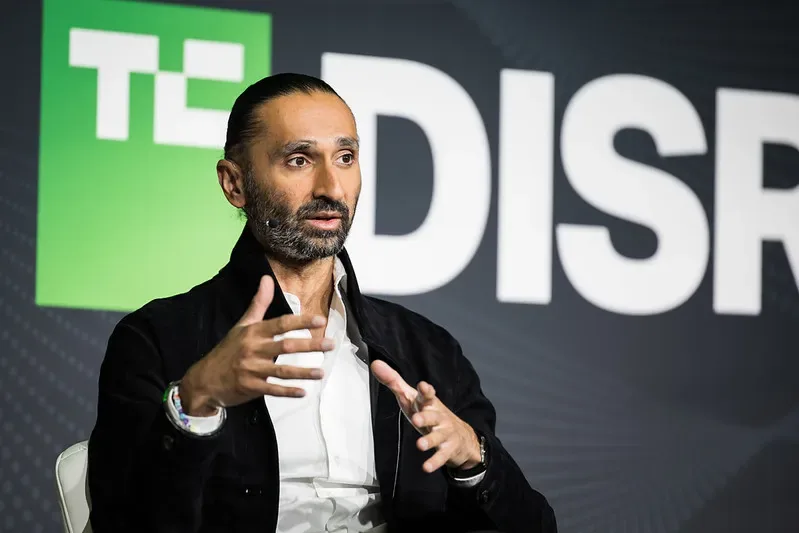
Blackstone executive Jas Khaira said fears of a credit crisis from AI infrastructure debt are overblown, even as neocloud CoreWeave carries about $50 billion in debt and its shares fell more than 20%. Speaking at TechCrunch Disrupt, Khaira argued the borrowing is ultimately backed by highly creditworthy hyperscalers. The statement matters because Blackstone manages $1.3 trillion and describes itself as the largest owner of compute outside hyperscalers.
How Blackstone finances AI compute
Earlier this year Blackstone launched Blackstone N1, or BXN1, a San Francisco hub for its AI initiatives led by Khaira after his move from New York. The group invests across strategies, from large loans to data centers to stakes in frontier models and applications. BXN1 backed Crux AI, a neocloud built with Google to commercialize custom TPUs, with a $5 billion commitment, and invested in four-year-old chip startup Etched. It also co-led a $10 billion credit facility for Australian GPU provider Firmus alongside Coatue.
Blackstone pioneered lending to venture-backed neoclouds, providers that rent AI GPU infrastructure, against customer contracts and pledged GPUs. Its first deal came in 2023 with CoreWeave, then reporting only $30 million in revenue with minimal profitability, which sought a $2.3 billion loan after demand surged following the ChatGPT launch. Blackstone accepted Nvidia GPUs as collateral, with Nvidia also an investor, and took comfort from contracts with customers such as Microsoft. That structure became a model for billions in follow-on debt to CoreWeave and rivals.
Unlike mobile or SaaS cycles that scaled with moderate capital, AI requires very large investment, creating an opening for flexible debt-to-equity financing. Khaira said Blackstone prices risk against the customer, so a contract with an investment-grade buyer such as Microsoft or Meta lowers the perceived risk. Recent strain reflects higher September interest rates, hotter inflation, a flood of infrastructure debt offerings, and wider credit spreads. Even Microsoft and Meta now pay more to borrow, while Firmus cancelled its Australian Securities Exchange IPO at a roughly $30 billion target valuation.
What AI debt pressure means for business
For companies buying or renting compute, the current repricing means neocloud capacity remains available but funding conditions are tighter and valuations are under review. Large enterprises with long contracts from Microsoft or Meta still unlock financing more easily, keeping data center construction moving. Smaller buyers without such backing may face higher prices, stricter contract terms, or preference for hyperscaler clouds. Tracking counterparty strength and contract length becomes a practical part of infrastructure planning.
The limits of the model are now visible in collateral quality and customer concentration. Altimeter Capital founder Brad Gerstner said CoreWeave GPUs alone are no longer enough to secure cheap debt, a warning for lenders relying on hardware value. Blackstone also runs a $1.5 billion joint venture called Ode with Anthropic and Hellman and Friedman, supplying forward-deployed engineers to its 280 portfolio companies. Khaira conceded AI returns are uneven and adoption follows a sawtooth pattern, so compute can look oversupplied before usage catches up.
The marker to watch is whether neocloud debt can still clear at workable spreads while hyperscaler demand holds. If new facilities for Microsoft, Meta and Google keep getting financed and enterprise adoption absorbs capacity, the overblown-fears case gains weight. If spreads widen further and listings or refinancings stall, buyers should expect slower expansion and tougher terms for GPU supply.
