
Atmospheric AI raised $10 million in seed funding to expand computational models of raw-material supply chains, with the round led by DBL Partners. The announcement came on November 5, 2026, one day after DBL published its portfolio page. The startup plans to move beyond plastics into chemicals, paper and metals. For procurement teams, the development matters because it offers an independent check on supplier prices and carbon claims.
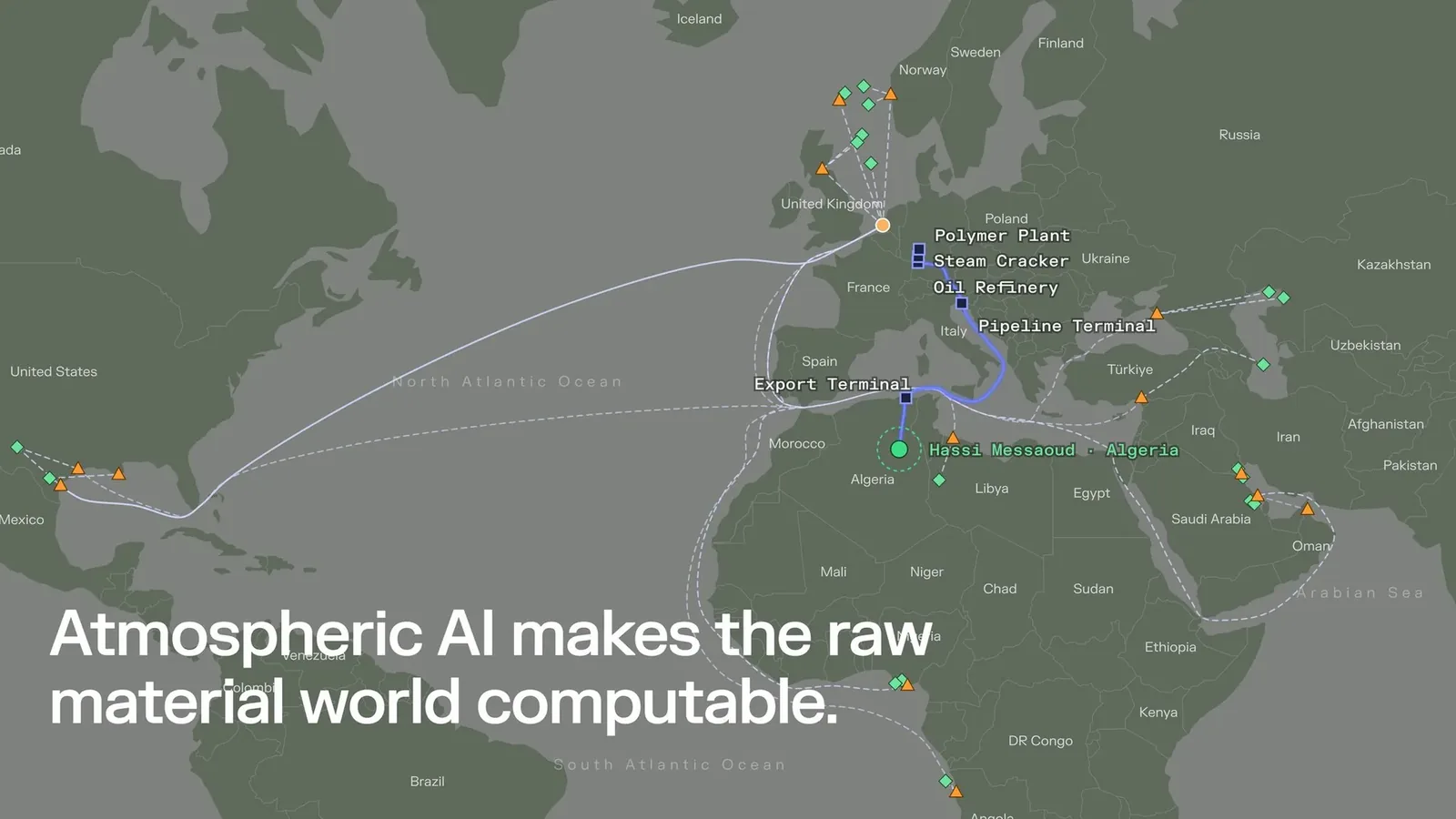
Facility models move beyond plastics
The financing pairs product expansion with governance and commercial changes. Vinnie Caruso of DBL Partners joins the startup board as part of the round. The company will deepen work with an initial group of around 100 manufacturers. Dr Torsten Lichtenau joins as founding chief commercial officer after 22 years at Bain and Company, where he served as senior partner and global head of carbon transition.
The technical method starts from physical production processes rather than supplier disclosures. Models combine chemical engineering, plant economics and industrial processes, linking feedstocks, energy, production costs and emissions. Coverage spans oil fields and pipelines, refineries, chemical plants, terminals and shipping routes. Atmospheric AI says it operates around 50,000 facility models, and in one test reproduced a producer published carbon footprint to within 4.4% without using that producer own data.
The platform is described as a dynamic digital twin of a raw-material value chain from origin to factory gate. It provides facility-specific data on cost, carbon and risk for should-cost analysis, supplier-specific Scope 3 emissions metrics and lifecycle-assessment integration. Multi-tier mapping, proactive alerts and sourcing recommendations place disruption response and negotiation in one workflow. Intended uses include testing whether a price rise is justified, finding alternative plants and assessing how a disrupted route affects cost, carbon or resilience.
What this means for procurement teams
For companies that buy resins and other raw materials, the approach changes the starting point of negotiations. Haleon head of sustainability procurement Chris Low said his team worked with Atmospheric AI for almost two years on resin sourcing. His team now starts from should-cost, carbon footprint and supply-chain risks instead of relying only on supplier quotes. Small buyers gain an analytical basis they normally lack, while large manufacturers can apply the same model across more categories and plants.
The limits concern coverage, accuracy and integration into buying decisions. The 4.4% carbon-footprint result refers to one test case, not a guarantee across 50,000 facilities or new categories such as chemicals, paper and metals. Buyers need to ask how models are updated, which routes and plants are covered, and how Scope 3 and lifecycle-assessment outputs fit existing reporting. The news alone does not prove that modeled should-cost figures will hold up in every negotiation.
Confirmation will come from expansion beyond resin sourcing into the promised material groups. A useful marker is whether the group of around 100 manufacturers adopts the platform for chemicals, paper and metals under the new commercial leadership. If modeled costs and alternative-supplier suggestions shape completed contracts, facility-based procurement analysis will have moved from pilot to standard practice.
