
Airbnb plans to begin rolling out an AI agent for trip planning and booking to guests in the first half of 2027, according to its third-quarter 2026 shareholder letter released November 5, 2026. The longer-term goal is an agent that plans an entire trip across homes, hotels, services and experiences, with discovery, booking and post-booking help inside Airbnb. The move matters for business because it shifts AI from answering travel questions to completing reservations and service actions.
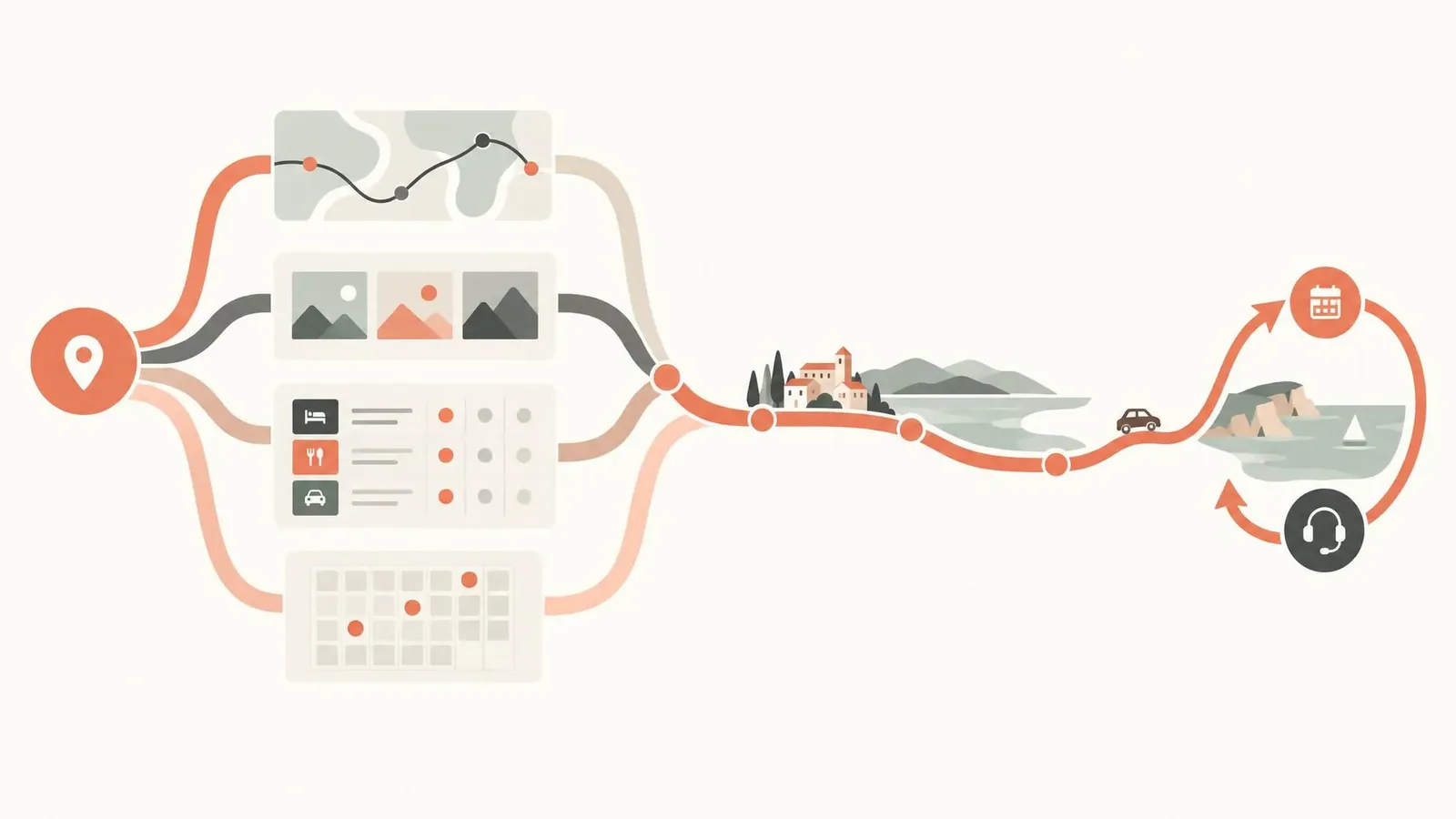
Agent with generated travel interface
The product remains in development and centers on an interface built around a guest question rather than a conventional text chat window. The agent draws from a library of hundreds of travel-specific interface elements, including maps, photos, comparisons, calendars and itineraries. It composes those elements in real time according to what the guest wants. Guests can then explore options, decide with travel companions and take action directly in Airbnb without switching tools.
The design treats discovery of where to go and where to stay as part of the travel experience, unlike routine tasks such as making a restaurant reservation or scheduling an appointment. Airbnb reports that more than 75% of guests use its maps when deciding where to stay, over 90% browse multiple listing photos and 70% read reviews before booking. The average booking has three guests, which makes lodging choice a shared decision. That explains the emphasis on browsing, visual comparison and group decision-making instead of only answering questions.
Airbnb cites nearly 20 years of bringing millions of hosts and guests together as the foundation for personalized search that outside agents cannot replicate. More than 90% of stays involve direct guest-host communication, with verified identities and reviews helping build trust. Reservation control is a second advantage because Airbnb handles reservations, payments and customer support. The planned agent is intended to change reservations, resolve payment issues, assist with refunds and rebooking, and provide access to 24-hour safety support.
What this means for travel businesses
For companies that sell travel, hospitality or local services, the practical change is a booking channel where search, comparison and service stay in one workflow. Several guest-facing pieces are already available: natural-language or voice search across homes, experiences and services, AI-suggested filters, AI-generated listing summaries and side-by-side wishlist comparisons with AI summaries. Small suppliers could gain structured presentation through maps, photos and itineraries, while large operators will need consistent photos, calendars, reviews and availability to appear correctly in generated results.
The limits center on integration, control and proof of performance. An outside agent cannot easily perform reservation changes, payment fixes or safety support without access to booking and payment systems, which is why Airbnb stresses ownership of those functions. It remains unclear how the 2027 rollout will be phased, which categories will be included first and how errors in generated itineraries will be handled. The news alone does not mean autonomous trip management is ready, so vendors should ask what actions the agent can complete, what requires human review and how refunds are processed.
The marker to watch is whether guest rollout starts in the first half of 2027 with booking plus post-booking actions, not only search. A second signal is the support automation trend: about 40% of Q3 2026 issues were resolved without a human agent, up from one-third in Q2, while cost per booking fell more than 17% year over year. If both booking automation and support automation advance together, AI will have moved from faster product releases to direct control of travel revenue operations.
