
Palantir built enterprise AI by embedding engineers inside customer operations rather than shipping a minimum viable product and iterating remotely, according to the book Forward Deployed by Riste Gramatikov. The review presents Forward Deployed Engineers as staff who work on site, observe supply chains and manufacturing processes, and turn specific problems into platform improvements. The account ends with a sharp divide between 5% of enterprises that transform and 95% that fall behind, which makes the model relevant for business buyers.
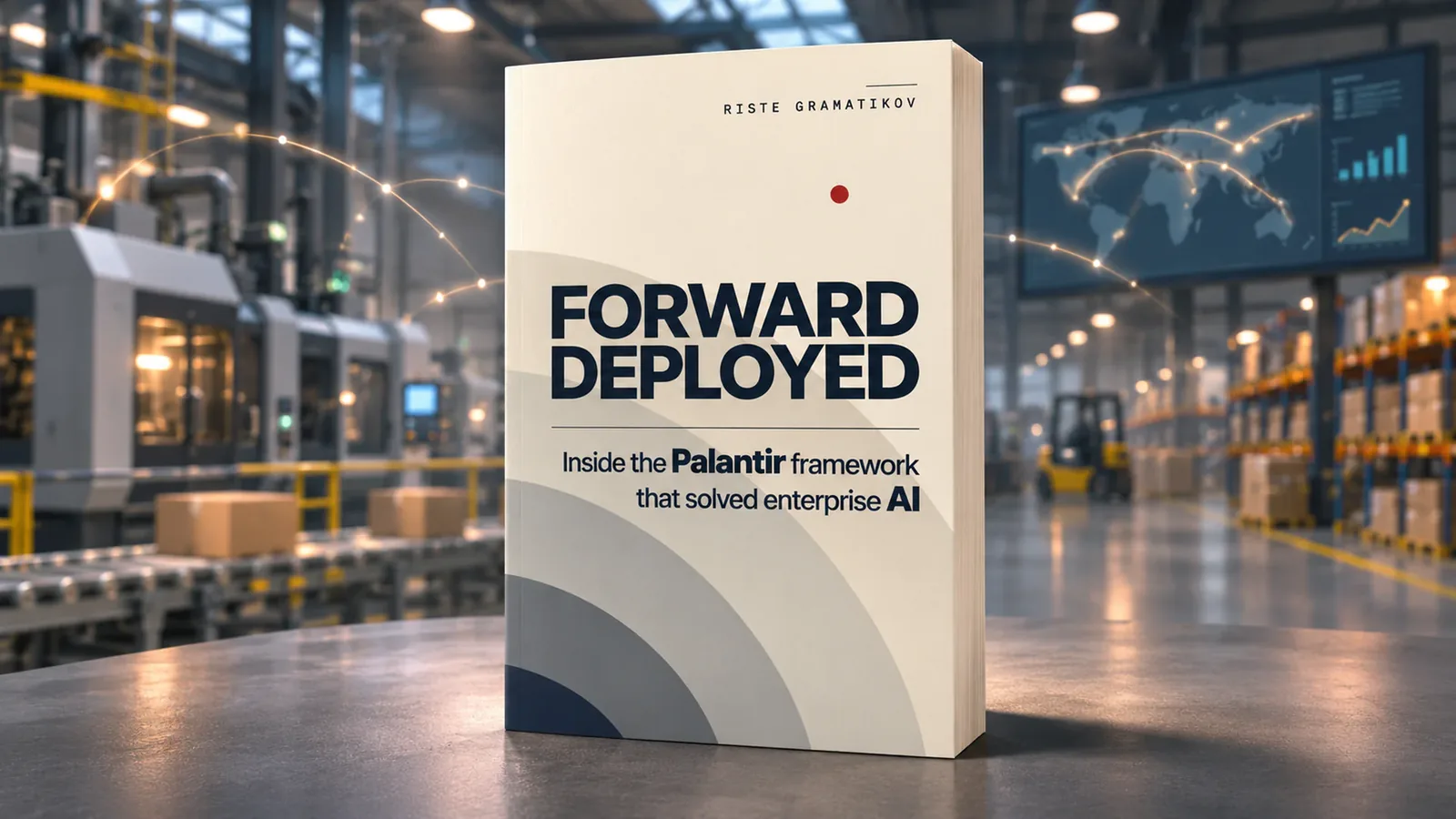
How embedded engineers replace the standard SaaS playbook
The book contrasts Palantir with three familiar SaaS rules: launch a minimum viable product quickly, validate before scaling, and build something a small group loves, an idea linked to Paul Graham and early Y Combinator. The Lean Startup by Eric Ries, published in 2011, taught teams to release early, collect feedback, and improve through small updates instead of waiting for a complete product. Palantir does not reject feedback but carries it further by placing engineers directly inside government entities and Fortune 500 companies.
The Forward Deployed Engineer model creates a direct loop between engineering and end users, from first observation to tailored solution and refinement during real use. Engineers study inventory management, logistics, manufacturing constraints, and agency-specific requirements, then adapt the software to those conditions. Lessons from each deployment are incorporated into the core platform rather than left as one-off custom code. That structure explains why immediate problem solving and long-term product development happen in the same assignment.
The review stresses that the book is an independent analysis drawn from public sources, organized around a composite simulation rather than disclosed internal documents. Its central case follows a simulated company called MidWest Manufacturing through several stages of work with Palantir. Following one business across stages shows how separate decisions on data, workflow, and deployment accumulate into an operating model. For executives, that format is useful because it shows sequence and trade-offs instead of isolated success stories.
What embedded delivery means for enterprise AI buyers
For companies using AI in operations, the practical consequence is a different definition of implementation: value comes from adapting a shared platform to specific plants, warehouses, and procurement rules. Small firms may find the approach demanding because it requires access to processes, data owners, and frontline staff. Large organizations with complex logistics and manufacturing footprints fit the model more naturally, since repeated deployments across sites let each project reuse capabilities developed in the previous one.
The limits concern fit, cost of engagement, and transferability of results. Bespoke work only pays off when customer-specific fixes become reusable platform functions, not when teams rebuild similar integrations from scratch. Buyers should ask what exactly returns to the core product after their project, who owns the custom logic, and what operational access the vendor requires. The review does not present pricing, timelines, or performance metrics, so those conditions need separate verification before commitments.
A concrete marker to watch is whether vendors convert individual enterprise projects into faster subsequent deployments and documented platform functions. If Palantir and its imitators publish repeated cases where the second deployment in logistics or manufacturing reuses components from the first, the compound learning claim gains weight. Absence of such reuse would suggest conventional consulting dressed in platform language.
