
Anthropic is likely targeting mid-November 2026 for a Nasdaq debut that could value the Claude developer at $1 trillion to $1.5 trillion, down from a previously floated $2 trillion target. CNBC described the company on November 7, 2026 as poised to become the first pure-play AI company to enter the public market, while Anthropic declined to comment. The timing matters because the listing would pair quarterly financial disclosure with an infrastructure expansion plan that many voters oppose.
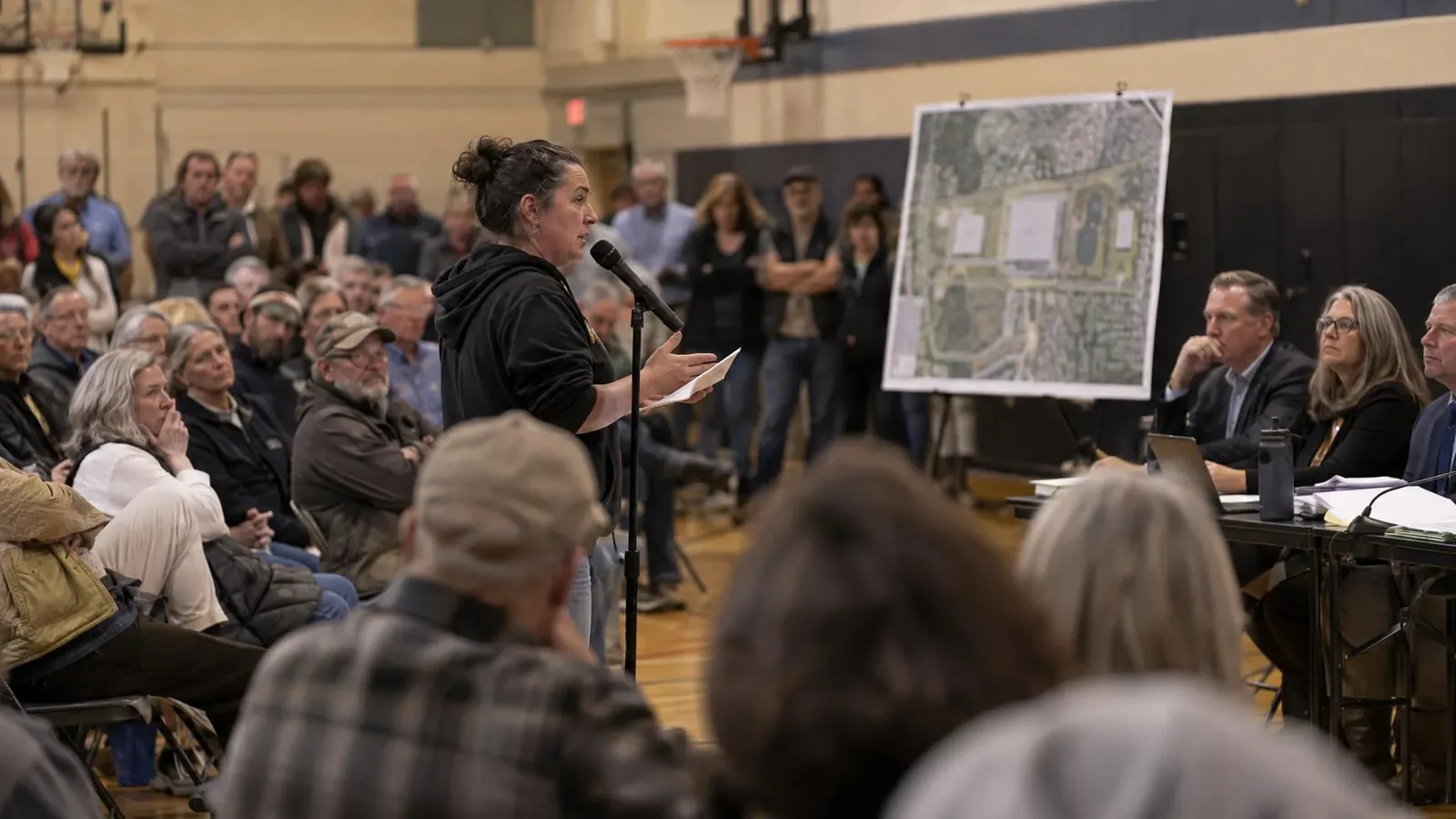
Listing plan and voter resistance to data centers
Investors now discuss a valuation range of $1 trillion to $1.5 trillion, a reduction from the earlier $2 trillion figure cited in the report. The amended registration statement filed November 2, 2026 was preliminary and said there was no prior public market for Class A shares. Anthropic has applied to list those shares on the Nasdaq Global Select Market. The filing disclosed approximately $895.4 billion in purchase commitments and lease agreements as of and subsequent to September 30, 2026, substantially all tied to compute and infrastructure.
The stated growth strategy calls for securing compute beyond those commitments and expanding Anthropic's own data-center footprint. Prospectus risk factors describe data-center opposition as increasingly organized across jurisdictions and warn that a higher public profile could draw particular scrutiny to associated projects. Gartner analyst Nicole Greene told CNBC that the fear and excitement around AI produce heightened scrutiny. Public-company status would also bring recurring quarterly financial disclosures.
Resistance is already visible in ballots and surveys. A CNBC analysis published November 4, 2026 counted 41 local data-center ballot measures across 10 states, with voters backing restrictions or rejecting pro-development measures everywhere except Harwood, North Dakota. Ohio accounted for 21 measures. A Gallup telephone survey of 1,000 adults on March 2-18, 2026 found 71% opposed a local AI data center, including 48% strongly opposed, against 53% opposition to a local nuclear plant, with a margin of error of plus or minus 4 points.
What the listing means for enterprise AI buyers
For companies buying Claude products and services, a listing would change the information available for procurement and planning. Quarterly reports would document revenue mix, compute obligations, and progress on owned data-center capacity beyond the $895.4 billion already committed. A small firm can use that disclosure to judge vendor stability before building workflows on Claude, while a large enterprise can track whether infrastructure spending supports service reliability and long-term contracts. The B2B focus that previously kept Anthropic out of the public spotlight will carry less protection once results are published.
Transparency alone does not resolve siting and trust risks that can delay capacity. A USC Annenberg October 2026 survey of 2,980 Americans found 62% opposed local construction and 46% opposed it nationally, while 71% did not trust Big Tech to act in society's best interest on data-center development. A Verasight survey of 1,690 adults on June 18-19, 2026 found 37% saying AI firms did more harm than good versus 27% seeing more good, and 89% supporting mandatory disclosure of safety-testing results. Buyers should ask where contracted capacity is located, what permits remain, and how testing results will be published.
The marker to watch is whether disclosure steadies expansion after the mid-November window. Renaissance Capital strategist Matt Kennedy argued that greater transparency could attract users without bringing harsher criticism than a private peer such as OpenAI faces. If ballot outcomes, permit decisions, and quarterly filings show capacity growing alongside stable enterprise demand, the trust argument will gain support in business planning.
