
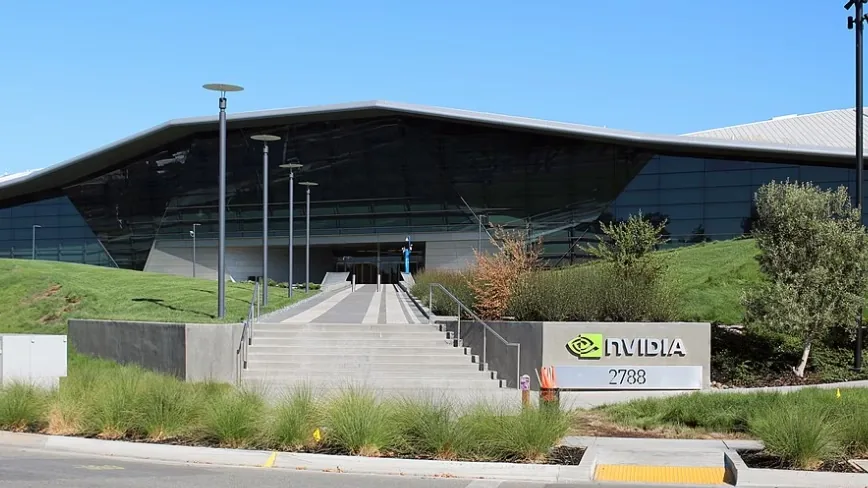
Nvidia is buying a further $1.5B of shares in SB Energy at 90% of the price of the data centre developer's coming US listing, Bloomberg reported, citing a regulatory filing on Monday. That takes the chipmaker's total backing to $3B. The discount matters because the buyer of the stock is also the supplier whose processors create the demand the developer is listing on.
What the filing shows
Nvidia is taking new N class nonvoting shares in a private placement, which buys the economics and not the votes. SB Energy is targeting $5B to $7B of proceeds from the listing. The developer is owned by SoftBank and holds 8.8 gigawatts of data centre capacity in contract or under construction, including projects in Texas and Ohio. OpenAI, which is planning a listing of its own, is also an investor. The parent's European capacity is not due before 2031.
The mechanics tie a tenant to a landlord through equity rather than a lease alone. SB Energy gave OpenAI warrants worth $5.5B to anchor a 20-year lease on a 10 gigawatt campus in southern Ohio, due to run in 2028. The warrants were issued in January at $3.6B and had gained about $1.9B by June. Nvidia's own entry follows the same logic: it holds no votes, but it holds the economics of a company whose campuses will be filled with its processors.
The context is rack density. Nvidia's liquid-cooled Rubin chips push rack density from roughly 250kW to 600kW, which raises the power a single site must secure before any chip is installed. Nvidia bought into three land and power companies in August alone. Power, not silicon, is now the constraint that decides how fast AI capacity can be built, and the companies that control land and grid connections are the ones being financed ahead of their listings.
What this means for business
For companies that buy or rent AI capacity, the practical consequence is that the supply chain is consolidating around a few landlords with secured power. A small company negotiating compute will increasingly deal with vendors whose campuses are anchored by a single large tenant on a long lease, which limits how much capacity is left for everyone else. A large buyer can negotiate directly with the developer and, in some cases, take the same kind of warrant or prepayment position that OpenAI took in Ohio.
What this news does not mean is that the model travels. No European power developer is being financed this way: Nvidia is not buying discounted pre-listing stock in one, and no campus on the continent has a tenant paying its rent in warrants. OpenAI paused Stargate UK in April, a project announced with Nvidia and Nscale for northeast England, citing British industrial electricity prices more than four times those in the United States and uncertainty over copyright law. It said it would proceed when regulation and the cost of energy allow long-term infrastructure investment, and neither has changed since. SoftBank has promised up to EUR 75B for 5 gigawatts of AI data centres in France, starting in Hauts-de-France at Dunkirk, Bosquel and Bouchain, with a first phase of 3.1 gigawatts by 2031, but that sits in a separate vehicle from the one listing in New York. Schneider Electric is the strategic partner at Dunkirk, on a grid that is roughly 70% nuclear.
The marker to watch is whether SB Energy prices its listing at or above the level at which Nvidia bought in. If the shares open below the 90% entry, the pre-listing discount will look less like strategic backing and more like a subsidy the chipmaker absorbed to keep capacity moving. If they open above it, other developers with secured power in the United States will have a template for raising money before they list, and business buyers should expect the same anchor-tenant structure to shape what capacity is available to them.