
Professional services firms are abandoning hourly billing for fixed bids as AI compresses the labor a single project consumes. Platinum River Innovations, a Salesforce implementation firm, rewrote its client contracts before bringing in AI tools, moving from time-and-materials to fixed-bid pricing so it absorbs delivery risk itself. The shift matters because the price of a project falls together with the hours behind it, and the vendor, not the client, carries the consequences of an overrun.
What happened at the Certinia event
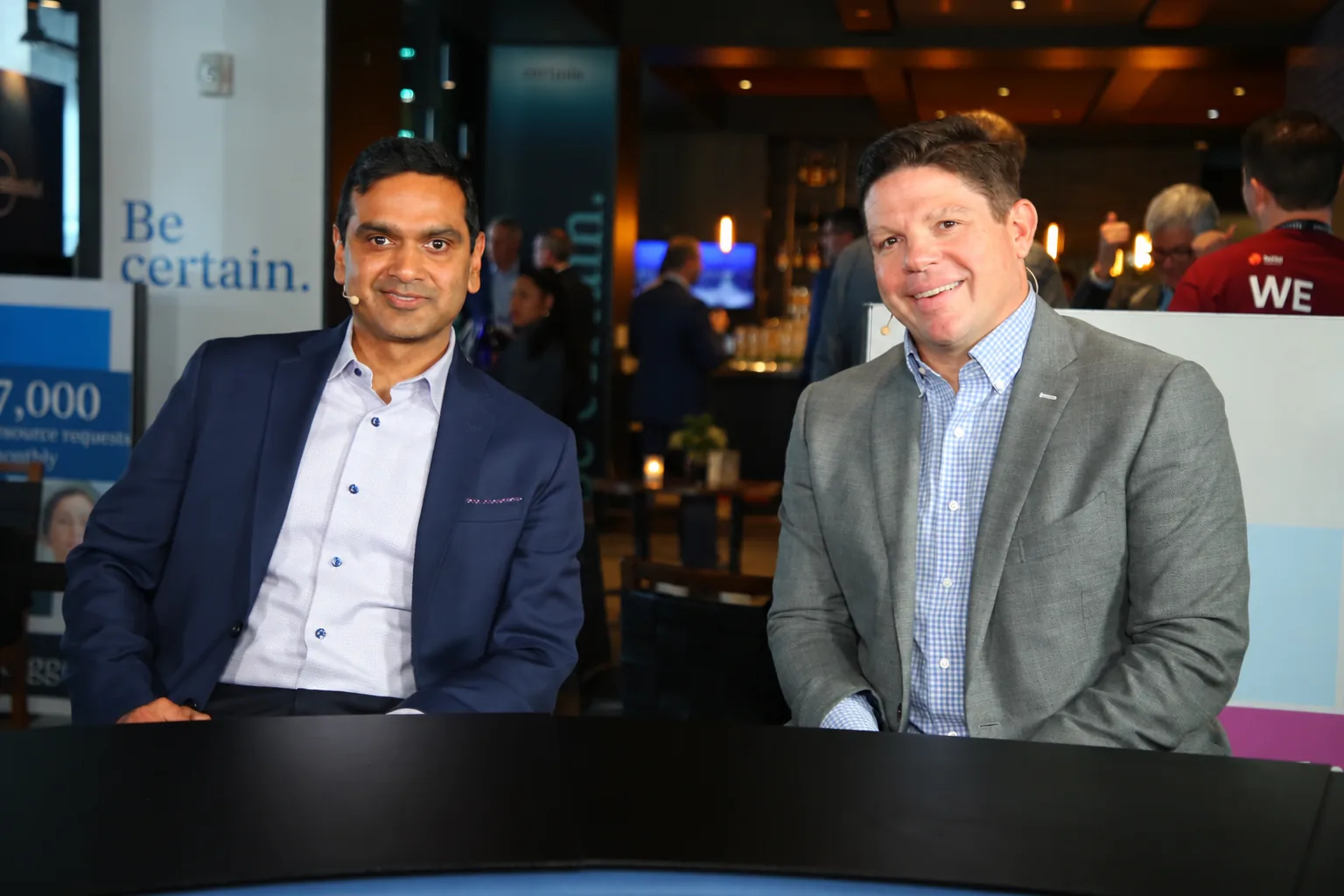
The discussion took place at the Certinia at Dreamforce event, where Mike Piehl, chief executive officer of Platinum River Innovations, and other industry experts spoke with Scott Hebner, principal analyst for enterprise AI at theCUBE Research. The interviews covered pricing models, agent architecture, knowledge graphs, context engineering and what all of it means for consulting careers. Certinia Inc. used the same event to present itself as a System of Action spanning professional services, customer success and financial management, with people at the center of a bolder brand, according to chief marketing officer Mimi Spier. Buyers now research through large language models and many never reach a website, so credibility built with customers, partners and analysts drives brand authority.
Certinia has merged its Veda AI suite with its core applications into one system covering the services lifecycle, from selling projects through resourcing, billing and delivery. Chief business officer Prasad Sulur and chief operating officer Robert Cesafsky framed the goal as eliminating entire workflows rather than chasing scattered tools that deliver 10% or 20% gains the enterprise never captures. The agentic surface has widened in step: since April the company has grown from 10 packaged agents and 64 Veda Intelligent Actions to 24 agents and 135 actions, with more than 300 planned by year's end, according to chief product and technology officer Raju Malhotra. The aim is to expose everything a human user can do in the product agentically, grounded in foundational context and compounding intelligence.
Piehl described the net effect of cheaper delivery as counterintuitive. The labor demand on an individual project is coming down, which normally would mean fewer people are needed, he said. But because overall price points are falling as well and value delivery is rising, client demand grows instead: more projects come in, and the net result is that more people are needed. Requirements, code generation and testing now run through AI at his firm, cutting internal cost, lifting margins and making projects viable that clients once could not afford.
What this means for business
For companies that buy consulting and implementation work, the practical change is the shape of the contract. A fixed bid transfers delivery risk to the vendor and makes the price predictable before work starts, which matters most for mid-size firms that cannot absorb an open-ended engagement. Large enterprises with long procurement cycles gain less from the pricing model itself and more from the compression of timelines, because their bottleneck is usually internal approval rather than the vendor's rate card. The set of vendors worth shortlisting also shifts toward those that can quote a fixed number without padding it.
What remains unproven is whether the savings survive contact with complex engagements. Civica UK Ltd. is consolidating bespoke systems left by years of acquisitions onto Salesforce and Certinia so estimating, delivery and revenue recognition run from a single source of truth, and chief information officer Simon Cornwell said that because its software touches about 100 million citizens, data residency, sovereignty and how tools are governed decide which AI it adopts. Thunder Inc. holds pre-sales commitments, scope changes and Slack discussions in one continuously refreshed knowledge graph, and VP of solution architecture Tyler Philpot warned that precise context yields better agent answers while overly broad context invites hallucinations. Neocol Inc. puts agents behind each stage of its delivery method but says agents that consume resources without returning value should be retired, according to CEO James Davidson. A fixed bid does not by itself prove that an agent's output can be trusted.
The marker to watch is the agent count Certinia has committed to: more than 300 Veda Intelligent Actions by year's end, up from 135 today. If that target is met and customers report that entire workflows disappear rather than individual steps speeding up, the fixed-bid model has an operational base under it. If the count grows while delivery teams stay the same size, the economics have not changed yet.