What Actually Happened
Now this is genuinely interesting to me. On October 2, 2026, Meta open-sourced the firmware and SDK for building Muse Gadgets—DIY hardware devices that connect the Muse AI agent to screens, buttons, sensors, and actuators. At the same time, the company introduced Muse Home Link, a compact USB-C device that connects Muse to a home network. It's being given away free to Muse subscribers in the US while supplies last. Nat Friedman announced it in a post on X, unveiling open firmware for ESP32 and a Linux SDK for anyone who wants to build their own gadgets.
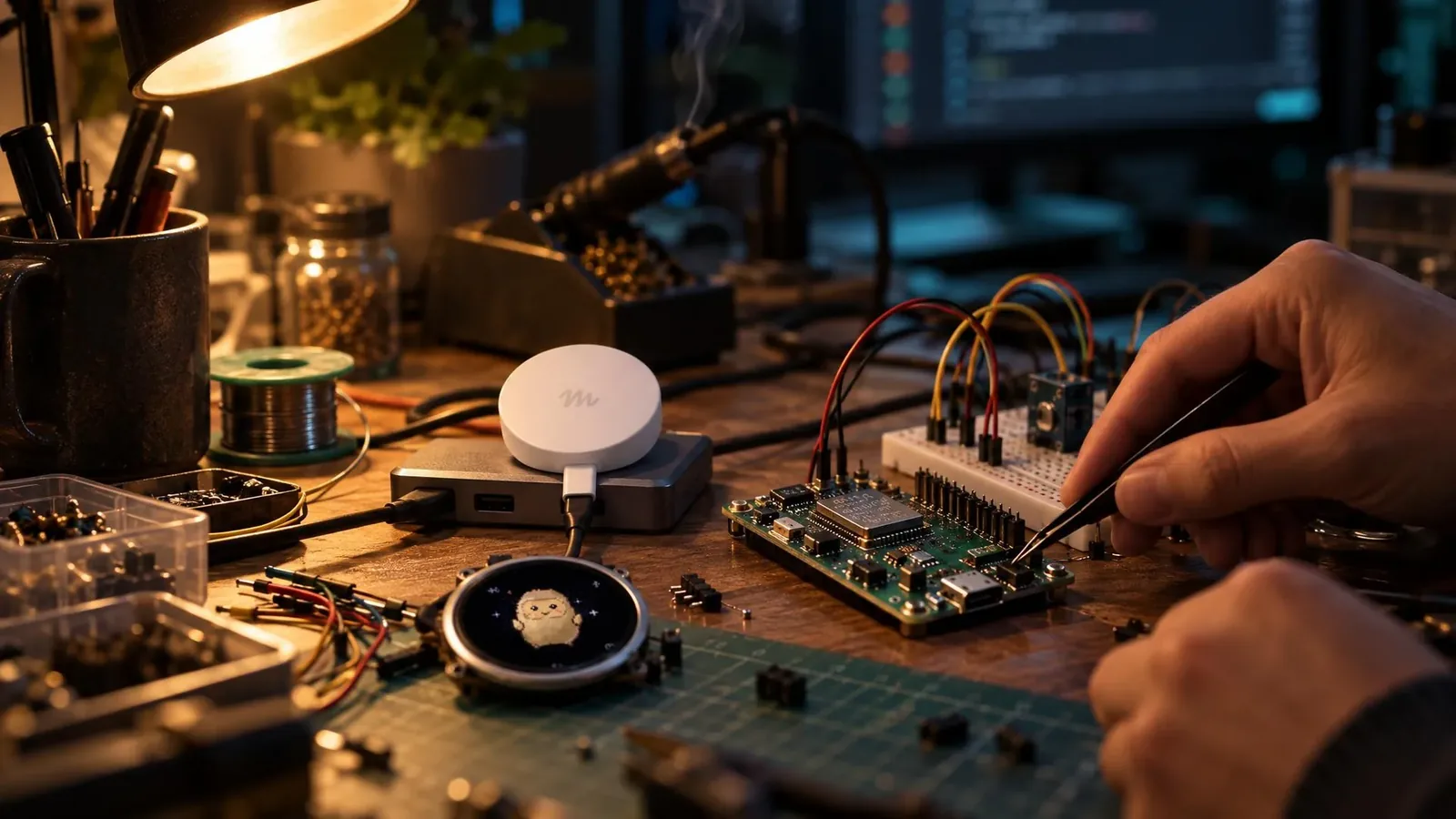
This is a notable step toward open hardware for AI. Instead of a closed ecosystem of smart speakers and displays, Meta is inviting developers, makers, and enthusiasts to build devices for their own needs. The firmware for the popular ESP32 microcontroller lets you connect simple buttons, lights, displays, temperature, motion, or humidity sensors to Muse. The Linux SDK targets more powerful devices—mini PCs, tablets, media centers, and robotics platforms. In effect, Muse turns from a chat in an app into a control center for the physical world.
What Exactly Meta Open-Sourced
According to Nat Friedman, the ESP32 firmware and Linux SDK are now publicly available, letting anyone create their own compatible devices. That means any developer can grab a cheap few-dollar board, flash it, link it to their Muse account, and teach the agent to respond to presses, voice commands, sensor readings, or perform actions—turn on lights, show info on a screen, spin up motors.
This approach dramatically lowers the barrier to entry. ESP32 has long been a DIY electronics standard: cheap, power-efficient, Wi-Fi and Bluetooth capable, with a huge library of examples and a big community. The Linux SDK, in turn, opens the door to more serious projects—from a smart mirror with a screen and voice control to a home control panel or a prototype helper robot. Developers don't need to reverse-engineer protocols or build workarounds through third-party integrations—they get official tools straight from Meta.
Importantly, this is genuinely open source. That means you can study the code, suggest improvements, adapt firmware to non-standard hardware, and not depend on one vendor's decisions. For the maker community, this is a familiar model. For big AI companies, it's still rare. They usually keep software and hardware tightly closed to control quality and monetization.
Why Muse Home Link Matters
The second part of the announcement is Muse Home Link, a small USB-C device that connects Muse to a home network. Meta's idea is for it to be a bridge between the cloud agent and local devices. You plug it in, and Muse gets access to home gadgets without complicated router setup, port forwarding, or network protocol wrangling.
The fact that it's free for Muse subscribers in the US while supplies last shows the company wants to grow its base fast. Meta is essentially subsidizing hardware to get people using Muse not just on their phones but in daily life. It's a classic platform strategy: give away the entry point cheaply or free, then monetize through subscription, ecosystem, and time spent with the assistant.
For regular people, this could look like the easiest way to try a next-generation smart home. No need to buy a whole single-brand ecosystem—you can start with one adapter and a couple of DIY sensors, then expand functionality gradually.
Why This Matters for Smart Homes and AI Agents
The Muse Gadgets announcement comes at a moment when AI agents are actively moving beyond chats. OpenAI, Anthropic, Google, and Amazon are developing voice assistants that can book, order, and manage apps and devices. The weak spot has always been hardware: smart speakers age quickly, and support for different smart home standards remains fragmented.
Meta is betting on openness and the DIY community to work around this. Instead of releasing dozens of its own device models, the company hands tools to the community and lets it dream up scenarios. History shows this is how the liveliest ecosystems are born—just think of Arduino, Raspberry Pi, or early 3D printing kits. Enthusiasts will quickly build buttons for ordering groceries, schedule displays, sensors for offices and garages, and successful ideas will then get picked up by businesses.
For small business and automation, this is especially interesting. A café could build a waiter call button linked to Muse, a warehouse—a door sensor with notifications, an office—a meeting room booking panel. All without ordering an expensive proprietary system or being locked into one contractor. Open SDKs let you prototype fast, test hypotheses, and scale what works.
Of course, questions remain around security, privacy, and support. Open hardware on a home network connected to cloud AI requires careful access setup and updates. Meta will have to convince users that Muse won't listen in on more than it should and that third-party gadgets won't become a hole in the network. But the direction is clear: AI agents are becoming a control layer for the physical world, not just conversation partners in an app.
For those who want to do more than build ESP32 prototypes—turning AI into real business tools—a systematic approach matters, from infrastructure to interfaces. And here a full stack helps: servers, agents, and websites from one team, letting you connect DIY experiments with Muse into sustainable solutions for automation and growth.