
FintechOS, a London-based company founded in Romania that sells AI software to banks and insurers, has raised $28M in a mix of equity and debt. The equity came from existing investors Bek Ventures, IFC, Cipio Partners and Molten Ventures, while Santander CIB provided a senior debt facility. The round follows a first half of 2026 in which the company says it became profitable — a milestone it had originally expected to reach earlier.
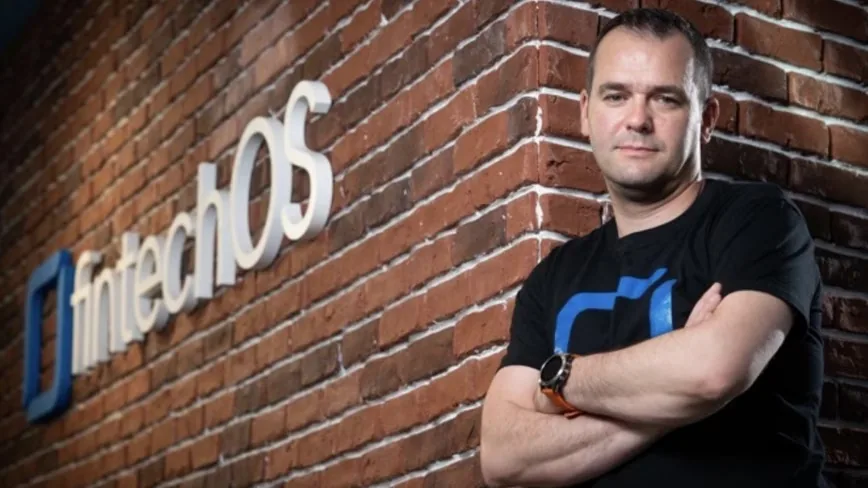
Who backs the round and on what terms
The structure of the deal matters as much as the amount. Equity from existing backers means no new investor takes a seat or resets the valuation, and a senior debt facility from Santander CIB is typically available only to companies that can already service interest from operating cash flow. FintechOS did not disclose the split between equity and debt, nor the valuation at which the equity portion was raised. The company also did not publish absolute revenue figures, limiting how far outsiders can verify the scale of the business behind the growth rates.
The money is earmarked for three things: expansion in the United States, securing more European clients, and enlarging the team that delivers the platform to customers. That third item points to a constraint familiar to enterprise software vendors — growth is limited not by demand but by the number of people who can install and configure the product inside a bank. FintechOS says it expects to sign more than 20 new financial institutions this year, which it describes as a record, and delivery capacity is what determines whether that target is met.
The reported numbers explain why investors were willing to commit again. Recurring revenue rose 40% year-on-year in the first half of 2026, the US business grew 130%, and operational EBITDA more than doubled over the same period. Profitability, however, arrived later than planned: when FintechOS raised a $60m Series B extension in 2024, it said it was on course to break even that year. The delay is a reminder that the path from venture funding to positive EBITDA rarely follows the schedule set at the previous round.
What this means for banks buying AI software
For banks and insurers evaluating vendors, the practical consequence is a shorter list of suppliers that can fund their own growth. A company that reaches profitability and then adds debt on top of equity has room to keep investing through a downturn without returning to the market on worse terms. For a mid-sized insurer, that reduces the risk that a core system integrator disappears mid-project. For a large institution, the more relevant question is whether the vendor can staff a multi-country rollout — which is exactly the constraint FintechOS says it is addressing with the new money.
What the news does not establish is how durable the profitability is. The company reported growth rates but not absolute revenue, so the 40% recurring-revenue increase could sit on a small base, and operational EBITDA excludes items that a full profit measure would include. Buyers should ask how much of the growth comes from new logos versus expansion inside existing accounts, how the debt facility is secured, and what happens to delivery timelines if hiring in the US runs behind plan. A partnership with Finxact, the core banking service owned by Fiserv, and an earlier agreement with Finastra Phoenix give access to banks and credit unions, but partnerships of this kind often take several quarters to convert into signed contracts.
The marker to watch is the count of new financial institutions signed by the end of the year. FintechOS has set its own bar at more than 20, and hitting it would show that the delivery model — small teams of one consultant and one engineer embedded in client product teams — scales beyond a handful of accounts. Missing it would suggest that the constraint is not capital but the supply of people who understand both the platform and the bank's legacy systems, and that is a harder problem for $28M to solve.