EliseAI has raised $350 million in new funding at a $4 billion valuation to extend its AI work automation suite for real estate and healthcare. The round was jointly led by Andreessen Horowitz and Bessemer, with participation from Ontario Teachers Pension Plan, Sapphire Ventures and Navitas Capital. The company says its platform already supports more than one in six apartments in the U. S. For business users, the deal signals that vertical AI automation is moving from pilots to large-scale deployment.
Funding round and current footprint
EliseAI, officially Elise A. I. Technologies Corp., was founded in 2017 with a focus on the rental housing market. The latest financing brings substantial institutional backing, including a major pension plan alongside two leading venture firms. The company disclosed that its healthcare platform is used by more than 3,500 organizations, ranging from small clinics to hospitals. That dual footprint across property management and healthcare forms the base for the planned product expansion.
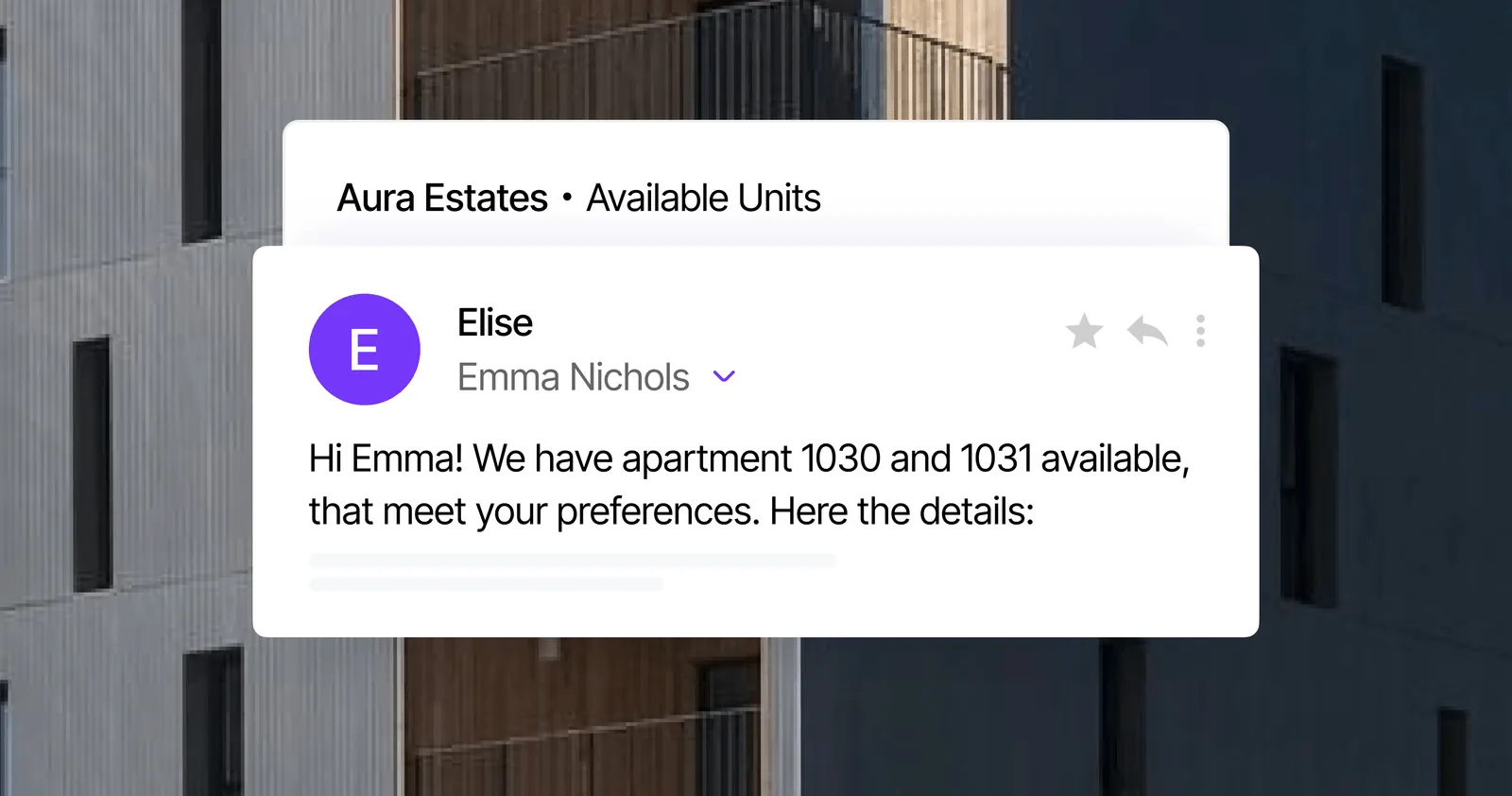
On the real estate side, the company offers a customer relationship management platform for storing prospect data and extracting information from interactions with residents. A marketing automation engine uses that data to tailor promotional materials for each lead. The Maintenance App routes repair requests to technicians based on availability and required skill sets. A monitoring dashboard lets property managers track repair progress in one place.
Earlier this month the company added Apollo, an AI assistant for property teams. Apollo automates follow-ups to leads who attended a property tour and works as an information retrieval tool. It can surface property management best practices and figures such as the average cost of outstanding maintenance projects. In healthcare, EliseAI provides a chatbot that schedules appointments and answers patient questions, processing up to 95% of inbound inquiries. The platform also ingests patient documents, syncs data to EHR systems, and automates post-visit tasks such as prescription reminders.
What the expansion means for operations
For operating companies, the practical effect is broader automation of front-office and coordination work. Property managers can centralize lead handling, tour follow-up, technician assignment and repair tracking without adding administrative staff. Healthcare providers can deflect routine calls, reduce manual data entry into records, and keep follow-up communication consistent. Small organizations gain access to capabilities that previously required larger support teams, while large portfolios and hospital networks can standardize processes across sites.
There are clear limits to what the announcement confirms. EliseAI said it will extend automation features and hire more engineers, deployment professionals and salespeople, but did not disclose timelines, product specifics or pricing changes. The 95% inquiry-processing figure describes software capability, not measured outcomes at every customer. Buyers should ask how the system integrates with their existing CRM and EHR setup, how exceptions are escalated to staff, and what implementation support is included.
The marker to watch is hiring and deployment pace over the next two quarters, along with new feature releases for the real estate and healthcare suites. Co-founder and CEO Minna Song framed these sectors as complex and entrenched, requiring sustained building for adoption. If customer counts and functional coverage keep growing after this round, it will confirm demand for domain-specific automation over generic assistants.