
Apple has updated the 14-inch MacBook Pro with the M6 chip, promising up to 30% faster graphics and up to 25% faster on-device AI than the M5 model. Battery life reaches up to 24 hours, the longest runtime Apple has offered in a Mac. Pre-orders open on Wednesday in 35 countries, with deliveries and store availability from November 6. For business, this matters because local large language model processing and creative workloads move closer to a full working day without a charger.
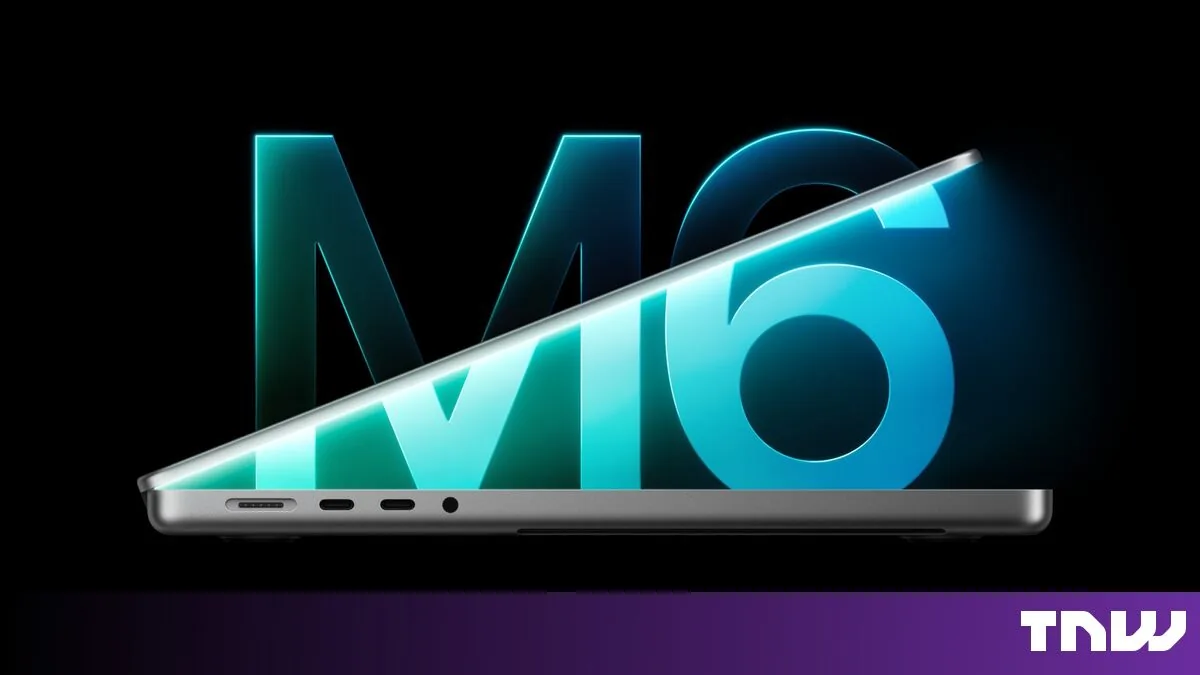
M6 specifications and launch terms
The M6 carries 12 CPU cores and 12 GPU cores, two more of each than the M5 in last year's model. Every GPU core includes a Neural Accelerator for AI workloads, while the separate Neural Engine for image generation and photo enhancement is up to 1.9 times faster. Apple describes the M6 as having the fastest CPU core in the world, based on its own tests. Compared with the M5 MacBook Pro, graphics are up to 30% faster and AI tasks such as processing a large language model locally run up to 25% faster. Against the 13-inch M1 MacBook Pro from 2020, the company claims up to 11 times faster graphics and 13 times faster AI performance.
The chassis is unchanged and ships in space black and silver with three Thunderbolt 4 ports, HDMI, an SD card slot, a headphone jack and MagSafe charging. The Liquid Retina XDR display still reaches up to 1,600 nits for HDR content, with an optional nano-texture finish to cut glare. Memory starts at 16GB and scales to 32GB, while wireless moves to Wi-Fi 7 and Bluetooth 6 with support for two external displays. Performance stays the same on battery or mains power, and a higher-wattage adapter charges the machine to 50% in around 30 minutes. The enclosure uses 100% recycled aluminium and the battery uses 100% recycled cobalt.
The launch sits alongside a refreshed iMac and continues Apple's yearly cadence of MacBook Pro updates. Rendering a 3D scene in Blender and building an app in Xcode are both up to 1.3 times faster than on the M5 model, according to company testing. Pricing starts at $1,999 in the US and 1,999 pounds in the UK, matching the M5 price immediately before launch. That level followed a $400 increase in June from $1,599, linked by EveryMac to higher memory and storage costs. The laptop ships with macOS 27, which brings an AI-powered Siri to the Mac after its iPhone debut in iOS 27.2.
What this means for corporate AI work
For teams that run AI locally, the combination of Neural Accelerators in each GPU core and a faster Neural Engine reduces dependence on cloud inference for routine tasks. Photo enhancement, image generation and local large language model work can run on the device, which helps in travel, client sites and offices with restricted networks. The 24-hour claim and identical plugged and unplugged performance support field sales, consultants and developers working away from outlets. Small firms gain a single-machine setup for AI-assisted content and code, while larger firms can standardize developers and designers on one configuration with 16GB to 32GB of memory.
The limits center on verification and software maturity. All speed figures come from Apple's own testing, so buyers should wait for independent Blender, Xcode and local model benchmarks on their own data. The new Siri in macOS 27 remains in beta, supports six languages and has daily usage limits, though it can search messages, emails and photos and act across apps. The $400 price rise since June shows memory economics now shape laptop budgets directly. Before ordering, companies should confirm language support, external display modes, Wi-Fi 7 infrastructure compatibility and fast-charge adapter specifications.
The marker to watch is real availability after November 6 in the 35 launch countries. Independent battery tests under office AI loads and Xcode builds will show whether the 24-hour record holds outside Apple labs. Removal of Siri beta limits and expansion beyond six languages would signal readiness for process automation. If both hold, the M6 generation becomes the baseline for mobile AI workstations.
