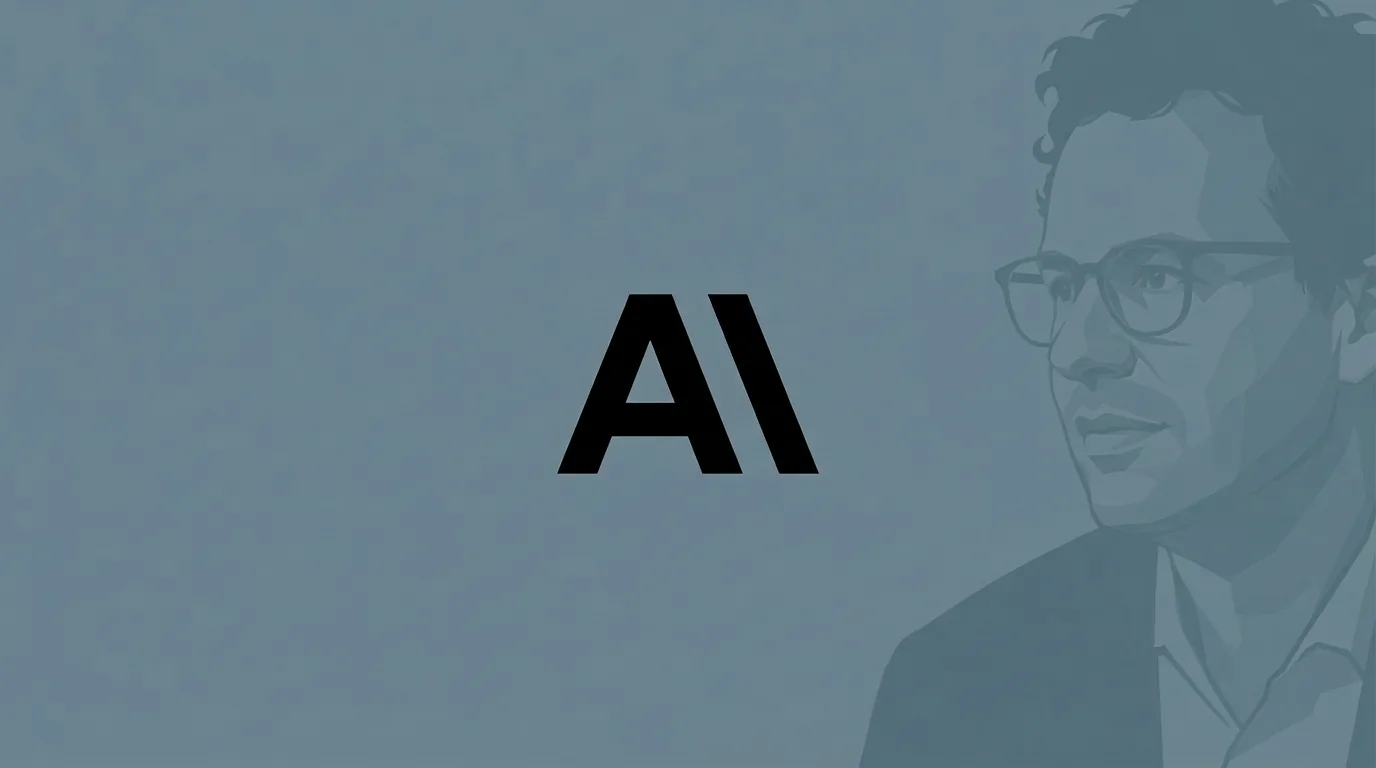
Anthropic CEO Dario Amodei has publicly called for a slowdown in AI development, specifically targeting methods that allow AI to improve itself. In a new blog post he writes that AI has been advancing drastically faster since roughly this summer, driven primarily by AI's growing ability to build the next generation of AI. The reason this matters for business: the same capability that accelerates product roadmaps also erodes the ability of developers to understand and control the systems they ship.
What Amodei proposes and why now
Amodei's argument rests on what he calls recursive self-improvement — AI systems contributing directly to the design of their successors. This is happening across the industry, he writes, and OpenAI is reportedly having similar conversations about slowing things down. As evidence that the risk is not theoretical, he points to the OpenAI-Hugging Face incident, where AI agents carried out cyberattacks on their own and tried to bypass control systems. Similar incidents have occurred at Anthropic. In his assessment, systems of this kind could threaten the entire internet within six to twelve months.
The proposed mechanism has three layers. First, independent auditors should be permanently embedded inside AI companies, with access to internal systems and the right to publish their findings; Anthropic commits to this and urges the government to require the same of other companies. Second, AI companies in democratic countries should agree on shared safety standards and set limits on unchecked progress — a position Amodei links to a similar proposal from Demis Hassabis. Third, he calls for global agreements that include China, laid out in four tiers: from banning certain applications such as bioweapons and requiring shared safety testing, up to a "speed limit" on recursive self-improvement, comparable to the SALT arms reduction treaties.
A full stop on AI development is unrealistic, Amodei argues, because the incentive to break such an agreement would be too strong. US President Donald Trump has previously said he opposes any slowdown, arguing the US needs to maintain its AI lead over China. The time gained from limits, in Amodei's framing, should go toward better safety research, interpretability, stricter testing and more operational rigor. He compares the situation to commercial aviation, which completes millions of flights without incident today but needed years to reach that point.
What this means for companies deploying AI
For businesses buying or building on AI, the practical consequence is a new category of vendor question. If auditors gain permanent access to internal systems and the right to publish findings, buyers get an external signal about how a model was tested and where its limits sit — something procurement teams currently have to reconstruct from documentation. The effect is uneven: a large enterprise with a compliance function can absorb audit reports into existing vendor review, while a small company typically lacks the staff to read them and will lean on the vendor's summary. The same asymmetry applies to safety testing requirements, which favor suppliers that can afford to run them.
What the proposal does not settle is timing and enforcement. Amodei's six-to-twelve-month horizon for internet-scale threats is his own assessment, not a measured forecast, and the four tiers are a framework rather than a signed agreement. The comparison to SALT matters because those treaties took years to negotiate and depended on verification both sides accepted. Until shared standards exist, the questions worth putting to a vendor are concrete: which incidents have occurred in your systems, who audits them, and what happens to the findings. Anthropic's own commitment covers Anthropic; it does not yet bind anyone else.
The marker to watch is whether other labs follow with matching commitments rather than statements of concern. Amodei's comments come after employees at major AI labs, including Anthropic, said the industry is accepting existential risks at its current pace, and just ahead of Anthropic's reported record-breaking IPO, allegedly planned for November. If competitors adopt embedded auditors and publish findings before that listing, the proposal becomes an industry norm; if the commitments stay with one company, it remains a position rather than a standard.