
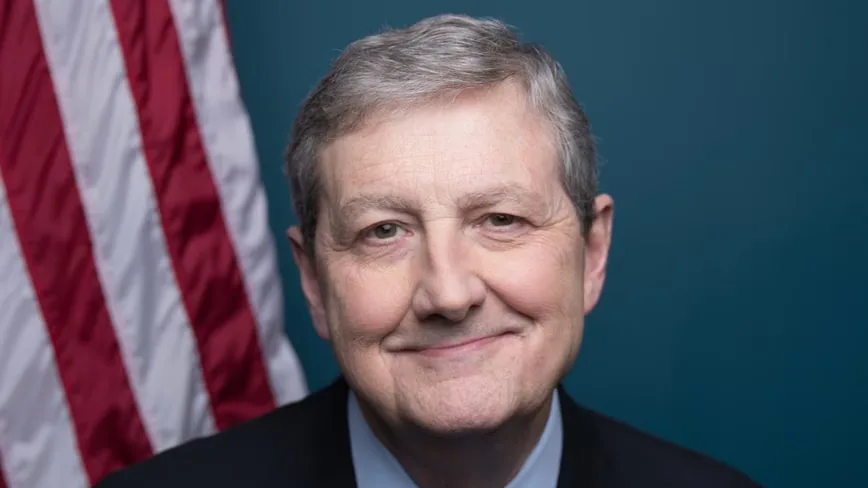
Three US senators will put artificial intelligence legislation before Congress this week, and none of them can say when it might be voted on. John Kennedy, a Republican from Louisiana, plans to introduce a measure on Wednesday requiring developers to build a shutdown mechanism into their systems. The Associated Press canvassed Congress on Tuesday and found the same answer in both parties: nothing will move. For companies that build or buy AI tools, the timing of federal rules now depends less on the arguments than on the legislative calendar.
What each senator is proposing
Kennedy's bill would oblige developers to include a kill switch in their systems. Bernie Sanders is hosting a briefing with AI researchers the same day and has a bill that would ban artificial superintelligence outright. Josh Hawley has already introduced bipartisan legislation covering national security, civil liberties and labour protections. Hawley also wants protections for workers, for children online and for people living near data centres, while saying plainly that frontier models will not blow up the world. None of the three bills has a committee date, a floor date, or a companion in the House. Kennedy's kill switch arrives on Wednesday into a chamber whose own leader has said the votes are not there for the broader bill he is already negotiating.
The mechanics differ from bill to bill, and so do the constraints. Kennedy's approach is technical: a shutdown mechanism written into the product itself, which would put the requirement on developers rather than on users. Sanders goes further and would prohibit an entire class of systems. Hawley's package spreads across national security, civil liberties and labour, which means several committees would normally have to review it. A bipartisan working group led by Chuck Schumer reported in 2024 that the United States should spend at least $32bn over three years on AI development and safeguards. Almost none of it followed, which shows how far a proposal can travel without a scheduled vote.
The stall is unusual because of who is asking for the rules. Dario Amodei said on Saturday that the industry must slow down, Sam Altman agreed the same day, and Elon Musk added his support. Rahm Emanuel, who ran Barack Obama's White House, told the AP that in his whole career he had never seen it: an industry or a CEO asking for regulation and oversight. Donald Trump has answered the request repeatedly and in the negative. He called the case for limits a conspiracy on Monday, having dismissed extinction fears the week before, and one of his first acts upon returning to office was to rescind Joe Biden's 2023 executive order on AI oversight.
What this means for business
For companies deploying AI, the practical consequence is that federal requirements stay uncertain while the states and the courts keep filling the gap. A small firm buying a model today cannot plan around a federal kill-switch rule, because the bill has no date. A large company with a compliance team can track three separate proposals and their committee paths, and can afford to wait. The difference matters most in hiring and procurement: until a date exists, contracts have to be written to survive either outcome, and vendors will keep answering questions about shutdown mechanisms without a legal standard to point to.
What the news does not mean is that regulation is coming soon. Senate Republicans are not uniformly opposed: John Thune, the majority leader, told the AP that Congress can set guardrails around the more consequential threats without harming the ability to stay ahead in the AI race, and he is working with Amy Klobuchar on a bill that would give Washington power to block unsafe models and impose a duty of care on developers. Mike Johnson said legislatures reflexively cover things in red tape and suggested Trump summon the AI companies to a meeting rather than pass a law. JD Vance has been cautious about regulation. When choosing a vendor, the questions worth asking are which jurisdiction's rules apply, what the contract says if a shutdown requirement appears, and who bears the cost of compliance.
Pressure from outside Congress has kept rising. Obama has been telling candidates they need an AI policy of their own; Max Stier of the Partnership for Public Service told the AP that delay will prove costly, and researchers at the labs have spent the summer warning publicly about what their employers are building. David Sacks, until recently Trump's AI adviser, told the same companies on Sunday to slow down quietly and stop asking Washington for anything in return. The marker to watch is whether any of the three bills gets a committee date; without one, the federal framework stays where it is, and business planning continues to rest on state rules and voluntary commitments.