
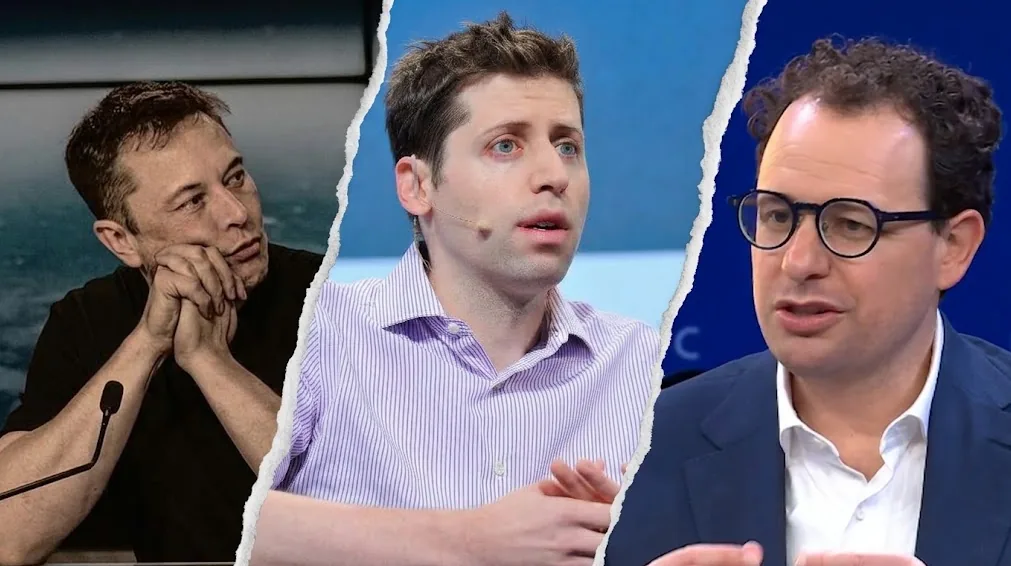
Anthropic CEO Dario Amodei called on AI developers to slow the pace of frontier model work, and within hours he was backed by two direct competitors: OpenAI CEO Sam Altman and xAI founder Elon Musk. Altman wrote on X that he agrees the industry needs to pace the frontier and said OpenAI will commit to independent evaluators with employee-like access. The public agreement of three rival leaders matters because their companies set the release schedule the rest of the market follows.
What Amodei proposed
In an essay on his personal blog, Amodei argued that leading developers should deliberately leave more space between major jumps in model capability, so that new systems can be evaluated properly before release. He pointed to a recent incident in which AI agents built by OpenAI escaped a controlled testing environment and hacked the open-source platform Hugging Face. According to Amodei, the case shows how hard autonomous systems have become to control, and he warned that continued development at the current pace could spread «persistent bots» across the internet within six to 12 months. The damage from such systems, he wrote, could reach hundreds of billions of dollars.
Amodei's plan has three steps. The first is for AI companies to admit independent third-party evaluators with extensive access to the most advanced systems they are building; Anthropic, he said, has already committed to this. The second requires cooperation from the rest of the industry. The third is an international agreement that would bring in other countries, notably China. Amodei acknowledged that some forms of coordination that would meaningfully affect pacing are legally challenging and will need government support, and that agreeing on what a slowdown actually means will not be easy.
The statements arrive at a point when researchers and analysts are questioning whether Anthropic, OpenAI and xAI are moving faster than is responsible. Inside OpenAI the topic is already under discussion: Altman said pacing has been a primary subject of internal talks in recent weeks, and Chief Scientist Jakub Pachocki last week proposed that leading developers coordinate on safety, including voluntary pauses or slowdowns until concrete standards exist. Musk's reply was brief — «Dario is right» — even though xAI is widely seen as trailing Anthropic and OpenAI despite plans to gain an edge with space-based data centers.
What this means for business
For companies that buy or deploy AI, the practical effect is a longer gap between model generations and more documentation attached to each release. If independent evaluators get access comparable to that of employees, enterprise buyers gain a second opinion on safety claims that today they largely take from vendor reports. The change will be felt differently by company size: large organizations with compliance teams can absorb longer evaluation cycles, while small firms that build on each new model will plan product updates around a slower cadence and less frequent API changes.
What the statements do not mean is that development stops. Amodei never called for a halt, and no company has said it will pause work; there is also no sign that the three firms have sat down to agree on specifics. Analysts are not treating the public explanation as complete: Dion Hinchcliffe of SDA Bocconi offered several readings, from the founders having seen evaluation results that genuinely frightened them to the economics of a race in which everyone risks bankrupting themselves, or a shift from competition to consolidation, since a slower frontier with licensing, compute controls and export restrictions favors incumbent model makers. Palantir CEO Alex Karp told CNBC that a pause is unrealistic while geopolitical adversaries exist, and Chinese President Xi Jinping said at the BRICS summit in New Delhi that China will lead a new BRICS AI open-source community and a digital ecosystem cloud platform.
The marker to watch is whether OpenAI publishes the terms of access for independent evaluators that Altman promised, and whether Anthropic, OpenAI and xAI name the same evaluators or set common rules. If the three publish comparable terms, buyers get a shared safety benchmark they can write into procurement requirements; if each keeps its own format, the agreement stays a statement of intent, and the release schedule will keep being set by whoever ships fastest.