
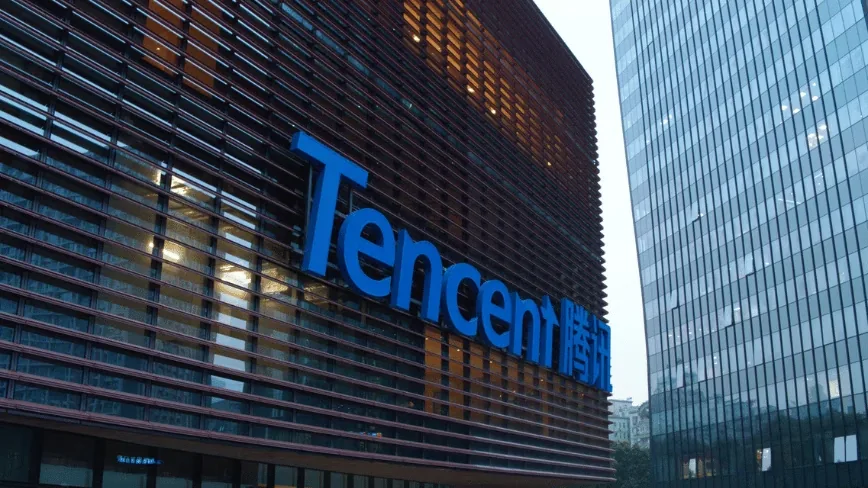
Shanghai Enflame Technology, a Chinese maker of artificial intelligence chips backed by Tencent, delivered one of the strongest trading debuts seen on Shanghai's Star Market this year. The company's shares closed 179% above their offer price on the first day of trading, a result that underlines how much investor appetite remains for hardware that powers AI workloads.
What happened on the first day of trading
The company raised roughly 6.12bn yuan, equivalent to about $911m, in its initial public offering, according to Bloomberg. The stock opened at 410 yuan against an IPO price of 142.18 yuan, and it continued to climb through the session before settling at a level far above where the offering had been priced.
The scale of the jump matters because Star Market listings are typically priced with a degree of caution, and a 179% gain on day one suggests that demand from institutional and retail investors far exceeded the supply of available shares. For a semiconductor company, that kind of reception is unusual outside of the most closely watched names in the sector.
Enflame designs chips intended for AI training and inference, a category where global demand has grown sharply as companies build out data centres capable of running large models. Tencent's backing gives the firm both capital and a potential route to customers inside one of China's largest technology ecosystems.
What this means for the wider AI hardware market
The debut adds weight to the argument that AI chipmakers outside the United States can attract serious public-market capital. It also reflects a broader push in China to build domestic alternatives across the semiconductor supply chain, from design tools to manufacturing capacity, so that AI development does not depend entirely on imported hardware.
For businesses that are planning to deploy AI agents, copilots or analytics systems, the practical effect is likely to be gradual rather than immediate. More competition among chip suppliers can improve availability and, over time, put pressure on the cost of the compute that sits behind every AI product. That matters most for companies running inference at scale, where per-request costs accumulate quickly.
The key question now is whether Enflame can convert investor enthusiasm into durable commercial traction. Public listings give chipmakers capital for research and expansion, but they also bring quarterly scrutiny. Companies evaluating AI infrastructure should watch how quickly new capacity reaches the market and whether it translates into more predictable pricing and supply for the systems they intend to run.